
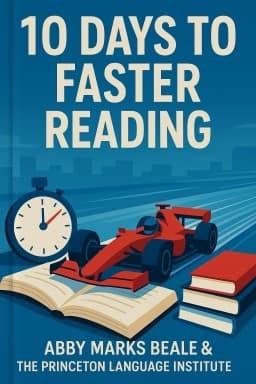
7 Speed Reading Myths That Are Slowing You Down (And How to Break Free)
Debunking Common Misconceptions So You Can Read Smarter, Not Harder

Debunking Common Misconceptions So You Can Read Smarter, Not Harder
Speed reading is surrounded by more myths than almost any other learning skill. Some say it’s only for geniuses or memory champions. Others fear it will ruin their comprehension or turn reading into a mechanical chore. But what does the evidence actually say? Let’s bust seven of the most common myths, drawing on Abby Marks Beale’s work and the latest research in reading science.
Myth 1: Speed Reading Is About Skimming and Missing Details
Reality: True speed reading is about reading smarter, not just faster. It teaches you to adjust your pace, preview material, and focus on what matters most. You don’t have to sacrifice comprehension—in fact, many readers find their recall improves as they engage more actively with the text.
Myth 2: You Must Pronounce Every Word in Your Head
Reality: Subvocalization is a habit formed in childhood. While it helps with difficult material, it’s not necessary for most reading. Techniques like humming, chewing gum, or using a pacer can help reduce this habit and unlock faster speeds.
Myth 3: Regression (Rereading) Is Always Necessary
Reality: Most regression happens out of uncertainty or distraction. By previewing material and using a pacer, you can trust your brain to understand and remember, reducing the urge to backtrack.
Myth 4: Speed Reading Is Only for Non-Fiction
Reality: While it’s true that technical material may require slower, more careful reading, speed reading strategies can be adapted to novels, articles, and even poetry. The key is flexibility.
Myth 5: You Have to Remember Everything
Reality: Good readers aim for 70–90% comprehension. Trying to remember every detail slows you down. Focus on main ideas, and use margin notes or summaries to reinforce learning.
Myth 6: Faster Reading Means Less Enjoyment
Reality: Many readers report that as they read faster, they actually enjoy reading more—because it feels less like a chore and more like an adventure.
Myth 7: Speed Reading Is a Talent, Not a Skill
Reality: Anyone can learn to read faster with practice. Consistent, mindful effort—using pacers, previewing, and reviewing—leads to measurable improvement for students, professionals, and lifelong learners.
Ready to break free from these myths? Start with small changes, track your progress, and watch your reading transform. The real secret isn’t speed—it’s understanding your own habits and knowing how to change them.
Citations: 10 Days to Faster Reading by Abby Marks Beale, Blinkist Magazine, PersonalMBA review, and modern reading research.
Want to explore more insights from this book?
Read the full book summary