
Sustainable Eating and the Future of Food: Innovations Inspired by 100 Million Years of Food
How ancient wisdom and modern technology combine to feed the planet sustainably.

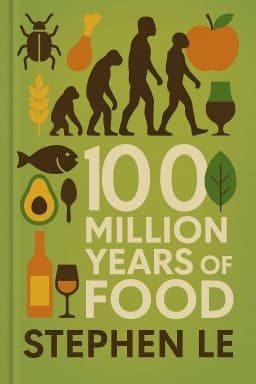
Feeding a growing global population while preserving the planet’s resources is one of humanity’s greatest challenges. "100 Million Years of Food" by Stephen Le offers a roadmap by blending ancestral wisdom with modern innovations to create sustainable food systems.
Insect farming stands out as a highly efficient protein source, producing fewer greenhouse gases, requiring less water, and occupying minimal land compared to traditional livestock. Scaling this practice could significantly reduce agriculture’s environmental footprint.
Permaculture principles integrate ecology and agriculture, designing farms that mimic natural ecosystems to conserve soil, water, and biodiversity. This approach revives traditional farming methods enhanced by scientific understanding, promoting resilience and sustainability.
Modern technologies like vertical farming, precision agriculture, and genetic modification complement these efforts by increasing yields and reducing waste. Yet, preserving cultural food traditions remains vital for community identity and health.
By harmonizing tradition and innovation, we can build food systems that nourish people and planet alike, ensuring food security for future generations.
Want to explore more insights from this book?
Read the full book summary