
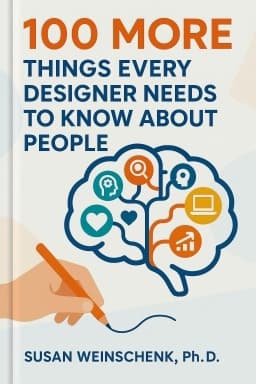
Why Designers Are the New Behavioral Scientists: The Surprising Power of Modern UX
How the Role of Designers Has Evolved with Brain Science and Technology

In the last decade, design has undergone a revolution. It’s not just about aesthetics anymore; it’s about understanding the human mind. Today’s designers must be part artist, part scientist, and part technologist. The explosion of neuroscience and behavioral research has given designers new tools to understand what drives people’s decisions, emotions, and actions. Imagine a world where your smartwatch vibrates not just to notify you, but to gently nudge you towards healthier habits, using cues that your unconscious mind can’t ignore. This is the new frontier of design.
Modern UX professionals are expected to know how the brain processes sensory data, how emotions are triggered, and how habits are formed. The rise of wearable technology—like smart headsets, vibrating vests, and even rooms that respond to your gestures—means we’re designing not just for screens, but for the entire human experience.
Consider the latest research: people process most information unconsciously, and their peripheral vision often guides their attention more than what’s front and center. Designers now use this insight to craft experiences that guide users gently, almost invisibly, towards their goals. For instance, a subtle color shift at the edge of a screen can direct attention better than a flashing button in the middle.
Take the example of a fitness app that uses soft haptic feedback and encouraging microcopy to help users build new routines. Instead of nagging reminders, the app offers small, positive nudges based on behavioral science, making healthy habits feel rewarding rather than burdensome.
As technology evolves, so does the designer’s toolkit. From understanding how memory works (and why it’s so unreliable) to leveraging the power of stories to inspire action, today’s designers are at the cutting edge of human-centered innovation. Are you ready to join the new wave of behavioral scientists shaping our world?
Want to explore more insights from this book?
Read the full book summary