
The Surprising Science Behind Jordan Peterson’s 12 Rules for Life
Exploring the biological and psychological foundations that make ‘12 Rules for Life’ a scientifically credible guide.

Jordan Peterson’s 12 Rules for Life often reads like a tapestry woven from myth, philosophy, and psychology. Yet beneath this rich narrative lies a foundation of rigorous scientific insight.
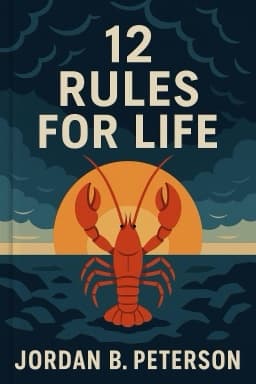
The lobster metaphor is more than poetic. Lobsters have existed for over 350 million years, and their dominance hierarchies provide a window into evolutionary strategies that shape social behavior across species. Serotonin, a neurochemical, regulates posture and confidence in lobsters, and similarly influences human mood and social status. This connection underscores the biological roots of our struggles with order and chaos.
Psychological research shows that lying disrupts mental coherence, causing stress and internal conflict, while truth-telling aligns thoughts and emotions, promoting well-being. Social science confirms the health benefits of supportive friendships and the harm caused by toxic relationships. Incremental self-improvement is backed by habit formation studies demonstrating the power of small, consistent changes.
Mindfulness and gratitude, often seen as spiritual practices, have robust scientific backing as methods to reduce anxiety and build resilience. Engaging fully with the present moment and recognizing positive experiences shifts brain activity toward well-being.
By bridging ancient stories with modern science, Peterson’s rules become more than guidelines—they become a scientifically credible roadmap for navigating life’s complexities with courage, truth, and responsibility.
For those seeking evidence-based strategies for mental health and personal development, understanding the science behind these rules offers a compelling reason to embrace them.
Sources: Reddit user insights, Medium psychological reviews, Tabletalk Magazine scientific commentary, Amazon reader experiences 1 2 3 4
Want to explore more insights from this book?
Read the full book summary