
Unlocking Life’s Secrets: Why ‘12 Rules for Life’ Is Your Ultimate Guide to Order and Chaos
Discover how ancient wisdom and modern psychology combine to offer practical rules for a meaningful life.

In an age where uncertainty and complexity rule, few books have resonated as deeply as Jordan Peterson’s 12 Rules for Life: An Antidote to Chaos. This work is not just another self-help manual; it is a profound synthesis of ancient wisdom, evolutionary biology, psychology, and personal responsibility that challenges readers to confront the chaos within and without.
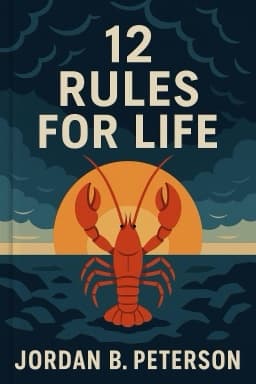
The opening metaphor of the lobster is more than biological trivia; it is a window into the primal roots of social hierarchy and human behavior. Lobsters, with their 350 million years of evolutionary history, exhibit dominance postures regulated by serotonin—a neurochemical that also influences human confidence and mood. This example illustrates how deeply embedded our struggles with order and chaos are in the fabric of life itself. Order represents stability, predictability, and structure, while chaos embodies the unknown, potential, and transformation. The tension and balance between these forces shape not only societies but individual psyches.
From this foundation, Peterson explores the paradox of self-care. Many people care more diligently for their pets than for themselves, a phenomenon rooted in feelings of shame and unworthiness. This insight reveals a profound psychological barrier to healing and growth. Ancient stories, like the biblical tale of the Garden of Eden, symbolize humanity’s awakening to self-consciousness and the burden of responsibility that comes with it. Caring for oneself as one would for another beloved being is not mere indulgence but a moral imperative necessary for standing firm against chaos.
Our social environment profoundly shapes our well-being. Choosing friends who genuinely want the best for us acts as a buffer against life’s stresses and fosters growth. Conversely, toxic relationships deepen chaos and dysfunction. The book emphasizes the importance of surrounding oneself with supportive individuals to thrive emotionally and mentally.
Central to personal development is the practice of comparing oneself not to others but to one’s past self. This approach avoids the pitfalls of envy and despair common in social comparison, fostering resilience and sustainable progress. Incremental improvements, no matter how small, compound over time to produce significant transformation.
Truth and integrity form the foundation of psychological health and meaningful relationships. Lying creates internal conflict and stress, while honesty aligns our thoughts, feelings, and actions. Trust in society depends on consistent truthfulness, without which chaos inevitably increases.
Communication skills—precise speech and active listening—are vital tools for navigating human relationships. Clarity reduces misunderstandings and conflict, while deep listening fosters empathy and connection.
In parenting and personal growth, allowing risk and challenge is essential. Overprotection can breed anxiety and dependence, while managed risk-taking builds resilience and competence. This balance is crucial for nurturing independence and emotional strength.
The book closes with a call to find peace amidst chaos through mindfulness and gratitude. Small acts of presence, like petting a cat on the street, ground us and foster resilience. These moments remind us that despite life’s difficulties, meaning and joy are always within reach.
In sum, 12 Rules for Life offers a timeless guide to living courageously and meaningfully. Its blend of science, story, and practical advice invites us to embrace responsibility, truth, and growth, helping us navigate the eternal dance of order and chaos with grace.
For those seeking a roadmap out of confusion and despair, this book lights the way.
Sources: Reddit review of 12 Rules for Life, Medium article on Peterson’s insights, Book review from Tabletalk Magazine, Amazon reader feedback 1 2 3 4
Want to explore more insights from this book?
Read the full book summary