
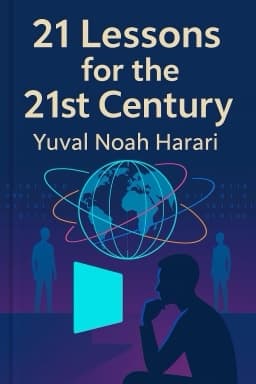
Why This Book Will Change How You See Humanity Forever
Unpacking the profound truths of our past, present, and future through a mesmerizing narrative.

Imagine stepping back to view the vast panorama of human history—not as a linear march but as a complex tapestry woven with stories of triumph, disillusionment, and transformation. This is the journey that Yuval Noah Harari invites us on in his groundbreaking work. He challenges the comforting notion that history has a clear direction or an ultimate destination. Instead, he reveals a world where ideologies rise and fall, where technology disrupts traditional structures, and where the future is uncertain yet brimming with possibility.
One of the most striking revelations is the collapse of the grand narratives that once unified societies: fascism, communism, and liberalism. Each promised a utopia but ultimately failed to deliver universal meaning or stability. This vacuum has left many feeling adrift, fueling a resurgence of nationalism and tribalism in an interconnected world that paradoxically feels fragmented.
Technology emerges as both a savior and a disruptor. Artificial intelligence and biotechnology advance at a pace that political systems struggle to match. Consider the example of AI mastering chess in mere hours, outpacing human experts who spend years honing their skills. Self-driving cars promise to save millions of lives but threaten to displace millions of workers. These shifts force us to rethink the very nature of work, creativity, and economic value.
But perhaps the most profound threat lies in the erosion of free will. Algorithms now decode our emotions through biometric data, subtly manipulating choices and opinions. The illusion of autonomy is under siege, raising urgent questions about privacy, democracy, and the essence of liberty in the digital age.
As power concentrates in the hands of those who control data and biotechnology, new biological castes may emerge, deepening inequality beyond anything previously seen. The social fabric risks fracturing into enclaves of privilege and zones of deprivation, challenging our ideals of equality and justice.
Yet, amid these challenges, there is hope. The resurgence of community, the quest for meaning beyond old stories, and practices like meditation offer pathways to resilience. Lifelong education and mindfulness become essential tools for navigating uncertainty.
This book is not just a history lesson but a call to awareness and action. It urges us to confront uncomfortable truths, embrace humility, and cultivate inner strength as we face an unpredictable future. The insights it offers illuminate the complexities of our time and inspire us to shape a more conscious and compassionate world.
For anyone curious about the forces shaping humanity’s destiny, this work is an indispensable guide—a mirror reflecting both our vulnerabilities and our potential.
Want to explore more insights from this book?
Read the full book summary