
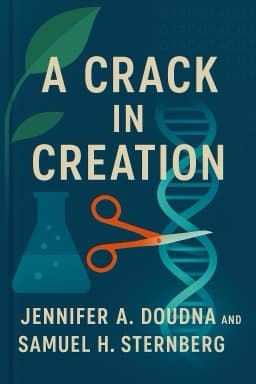
From Bacteria to Breakthroughs: The Story Behind CRISPR’s Rise
How a bacterial defense system became the world’s most powerful gene-editing tool.

In the microscopic world, bacteria face constant threats from viruses known as phages. To survive, they evolved an ingenious defense mechanism called CRISPR — a genetic memory bank that captures snippets of viral DNA and uses them to recognize and destroy future invaders. This discovery, initially a scientific curiosity, laid the foundation for a gene-editing revolution.
Scientists uncovered that the CRISPR-associated protein Cas9 acts as molecular scissors, guided by RNA molecules derived from the stored viral sequences. By cutting the invading DNA at precise locations, Cas9 disables viruses with remarkable accuracy. Recognizing this natural system’s potential, researchers engineered a simplified version combining the two RNA guides into a single-guide RNA, greatly enhancing usability.
This breakthrough transformed Cas9 from a bacterial defense protein into a versatile tool capable of editing DNA in plants, animals, and humans. The ability to induce targeted double-strand breaks allows cells to repair their DNA, enabling scientists to make precise genetic changes.
The story of CRISPR exemplifies how fundamental research into microbial genetics can yield technologies that redefine medicine, agriculture, and biotechnology. It is a testament to the power of curiosity-driven science and collaborative innovation.
As CRISPR technology continues to advance, it carries the promise of curing genetic diseases, improving crop resilience, and combating ecological threats, opening a new chapter in human capability and responsibility.
Want to explore more insights from this book?
Read the full book summary