
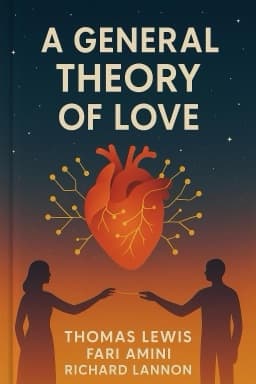
Unlocking the Brain’s Secrets: How Love Shapes Our Minds and Lives
Discover the fascinating biology behind love and why understanding it can transform your relationships.

Love is often spoken of as a mysterious force, a poetic ideal, or an emotional experience beyond explanation. Yet, modern science reveals that love is deeply rooted in the biology of our brains and bodies. Understanding this can profoundly change how we view our relationships and ourselves.
The journey begins with the triune brain model, which shows that our brain is not a singular, unified organ but an evolutionary mosaic. The oldest layer, the reptilian brain, governs basic survival functions such as heartbeat and territorial instincts. Above it lies the limbic brain, the emotional core responsible for feelings, attachment, and social bonding. The newest part, the neocortex, enables reasoning, language, and abstract thought. This layered structure explains why love can be both primal and intellectual, instinctive and reflective.
Next, we explore limbic resonance, the silent emotional communication that connects people beyond words. When two individuals lock eyes or share a moment, their limbic systems synchronize, fostering empathy and mutual understanding. This emotional contagion is universal, transcending cultures and languages, demonstrated by the innate facial expressions shared by all humans.
Our relationships do more than enrich our emotional lives; they regulate our physiology. Limbic regulation means that close bonds influence heart rate, hormone levels, immune function, and even sleep. Social isolation disrupts these processes and increases health risks. The story of infants stabilized by their mother’s presence or even by rhythmic toys exemplifies how connection is vital for survival.
Emotional memories formed early in life shape our relational identities. These implicit memories, stored outside conscious awareness, create emotional attractors that guide our behavior. Secure attachments foster resilience, while insecure ones predispose us to anxiety and avoidance. Understanding these patterns helps us recognize why we are drawn to certain relational dynamics.
Finally, psychotherapy offers a path to healing by engaging the brain’s plasticity. Through emotional attunement and corrective experiences, therapy rewires maladaptive neural circuits, enabling new patterns of love and connection to emerge. This relational healing underscores the power of human connection to transform lives.
By embracing the science of love, we gain tools to nurture healthier relationships and foster emotional well-being. Love is not just a feeling but a biological imperative that shapes our minds, bodies, and futures.
For further reading, explore the original book and related scientific literature to deepen your understanding of this remarkable force that defines the human experience.
Sources: The Science of Love by John Baines, Prometheus Books; reviews and insights from Goodreads and CBC Life articles. 1 2 3 4
Want to explore more insights from this book?
Read the full book summary