
Focused vs. Diffuse Thinking: The Two Modes That Supercharge Your Brain
Why switching between laser focus and relaxed daydreaming is the secret to creative breakthroughs and deep learning.

Unlocking Creative Problem Solving Through Brain Science
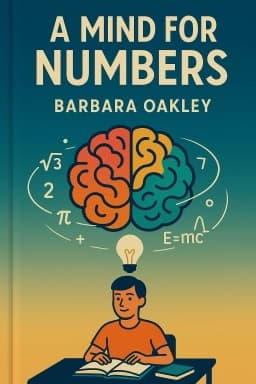
What if the secret to learning wasn’t just hard work, but knowing when to step back and let your mind wander? In 'A Mind for Numbers,' Barbara Oakley introduces readers to the two gears of the brain: focused and diffuse thinking. Focused mode is like a spotlight, perfect for tackling familiar problems or memorizing facts. But when you’re stuck or need a creative breakthrough, it’s time to switch to diffuse mode—relaxed, open-ended, and unconstrained by routine.
Oakley shares stories of inventors and scientists who found solutions not at their desks, but while walking, showering, or drifting off to sleep. This is the brain’s resting state at work, quietly connecting ideas and generating insights. The trick is to alternate between modes: focus deeply, then step away. Breaks, exercise, and even naps are not indulgences—they’re essential tools for learning.
To harness both modes, Oakley recommends scheduling deep work sessions, followed by deliberate breaks. When you hit a mental block, don’t force it—trust that your brain is still working behind the scenes. Over time, this dance between focus and relaxation leads to deeper understanding, faster problem-solving, and more creative thinking.
The next time you’re stuck, remember: sometimes the best way forward is to take a step back. Your brain is a powerful ally—let it work for you, both in the spotlight and in the shadows.
Want to explore more insights from this book?
Read the full book summary