
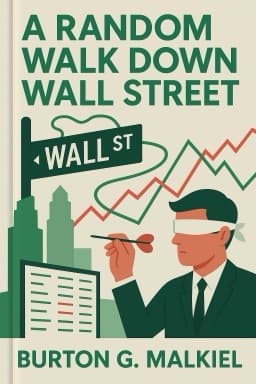
Why Most Investors Fail: The Shocking Truth Behind Market Randomness and How You Can Win
Uncover the hidden forces that make markets unpredictable and learn how to harness them for your financial success.

Imagine stepping into a bustling marketplace where every price tag seems to change unpredictably, where no matter how much you study the past, the future remains a mystery. This is the stock market — a realm governed by the
Two fundamental theories attempt to explain how stocks find their value. The Firm-Foundation Theory suggests that stocks have intrinsic value based on company fundamentals like earnings and dividends. Think of it as valuing a house by its bricks and mortar. Conversely, the Castle-in-the-Air Theory posits that prices are driven by investor psychology and speculation — the castles people build in their minds, hoping others will pay more tomorrow.
History is littered with spectacular bubbles fueled by herd behavior and speculative mania. From the tulip mania of the 1600s, where flower bulbs were traded at prices exceeding homes, to the South Sea Bubble involving government debt schemes and fraud, these episodes reveal the power of collective psychology. Even the most sophisticated institutions have been caught in these frenzies, as seen in the 1960s 'tronics' boom where companies added buzzwords to their names to inflate stock prices artificially.
Fast forward to the Internet bubble of the late 1990s, where companies with no profits soared in value simply by adding '.com' to their names. Securities analysts, conflicted by investment banking relationships, often issued overly optimistic reports, further inflating valuations. When the bubble burst, the fallout taught harsh lessons about the dangers of hype over fundamentals.
Behavioral finance sheds light on why investors act irrationally. Psychological biases such as overconfidence, loss aversion, and herding cause investors to make decisions driven more by emotion than logic. For example, loss aversion makes the pain of losing money feel stronger than the joy of an equivalent gain, leading to poor selling and holding decisions.
Modern Portfolio Theory offers a way out of this emotional maze, advocating diversification to reduce risk and optimize returns. By combining assets that behave differently, investors can smooth out volatility. Life-cycle investing further personalizes this approach, adjusting asset allocation based on age and goals, encouraging younger investors to embrace stocks and older investors to seek stability.
Ultimately, the key to winning in the market lies in embracing its unpredictability, controlling emotional biases, minimizing costs, and focusing on the long term. Low-cost index funds, disciplined investing, and a clear plan aligned with your personal journey are the best tools to navigate this complex landscape.
By understanding the forces at play and adopting these timeless principles, you can turn the market’s randomness into your ally rather than your foe.
Sources: Forbes, Bankrate, TheStreet 1 2 4
Want to explore more insights from this book?
Read the full book summary