
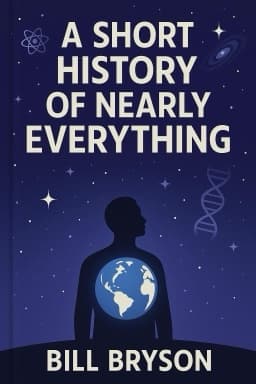
From Nothing to Everything: How the Universe’s Miraculous Birth Redefines Our Existence
Explore the astonishing story of how the universe emerged from nothing and gave rise to the atoms that built life itself.

Imagine a time when there was literally nothing — no atoms, no space, no time. A void so complete that not even the faintest glimmer of light existed. This is the profound starting point of our universe’s story. Then, in an event known as the Big Bang, everything — space, time, matter — suddenly burst into existence, setting the stage for all that was to come.
Atoms, the fundamental building blocks of matter, emerged shortly after. These tiny particles, composed of protons, neutrons, and electrons, are themselves mindless and inert. Yet, in their unique arrangements, they form the molecules that underpin life itself.
Consider the atoms in your body — many have traveled through stars, oceans, and ancient forests before becoming part of you. This atomic recycling connects us intimately to the cosmos and the history of the universe. When we die, these atoms disperse, continuing their eternal journey through space and time.
This delicate balance of atomic cooperation is a fleeting miracle. The elements essential for life — carbon, hydrogen, oxygen, nitrogen — are common throughout the universe, yet their assembly into living systems is extraordinarily rare. It reminds us of our unique and precious place in the vast cosmic tapestry.
As we contemplate this breathtaking origin, we begin to understand that the universe is not a static backdrop but a dynamic and evolving story. From nothing to everything, the cosmos has crafted a narrative of astonishing complexity and wonder.
Want to explore more insights from this book?
Read the full book summary