
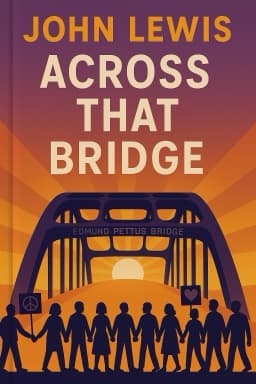
7 Life Lessons from John Lewis’s ‘Across That Bridge’ That Will Transform Your Perspective
Unlock the Enduring Wisdom of a Civil Rights Legend and Elevate Your Own Journey

Unlock the Enduring Wisdom of a Civil Rights Legend and Elevate Your Own Journey
John Lewis’s ‘Across That Bridge’ is not simply a book—it is a call to action, an invitation to look deeply within and to reach bravely outward. Lewis, a titan of the Civil Rights Movement, infuses every page with the lessons he learned on the front lines of history. These are not abstract ideas; they are lived truths, earned through hardship, struggle, and ultimately, hope.
1. Faith: Building Bridges of Belief
Lewis begins with faith—not faith as a passive hope, but as an active force. He describes faith as the first step across any bridge, the courage to act without knowing the outcome. Faith is what allowed Lewis and his peers to walk into the unknown, facing violence and hatred with the certainty that justice was on the other side.
2. Patience: The Quiet Strength
Patience, Lewis teaches, is not resignation; it is the steady endurance that keeps hope alive through setbacks. The Civil Rights Movement was not won overnight—every sit-in, every march, every setback required patience. Lewis recounts waiting in unmoving lines to register to vote, a quiet act of resistance that demonstrated the movement’s resolve.
3. Study: Preparation as Power
Preparation was key to the movement’s success. Lewis and his fellow activists didn’t just act—they studied, trained, and learned from past movements around the world. Workshops on nonviolence, role-playing, and studying the philosophy of Gandhi and others turned passion into effective action.
4. Truth: Speaking Light into Darkness
Truth-telling, even when dangerous, was a cornerstone of Lewis’s activism. He describes how sit-ins and protests forced the country to confront the realities of segregation and injustice. Truth, Lewis reminds us, can be attacked or denied, but it endures—and it liberates.
5. Peace: The Inner Revolution
Lewis’s vision of peace is not simply the absence of conflict, but the presence of compassion and understanding. Nonviolence starts with the self—softening anger, healing wounds, and cultivating empathy. This inner work radiates outward, transforming communities and inspiring global movements.
6. Love: The Most Durable Power
At the heart of Lewis’s message is love—love for friends, for adversaries, and for humanity itself. He shares stories of former enemies becoming allies through acts of forgiveness and compassion. Love, he insists, is the only force that can truly transform and reconcile.
7. Reconciliation and Action: Building the Beloved Community
The final lesson is that reconciliation and action go hand in hand. Forgiveness liberates, and unity is built through shared civic engagement. Lewis calls on every generation to pick up the torch and continue the work, reminding us that freedom is a continuous act, not a final destination.
‘Across That Bridge’ is a living roadmap for anyone who wants to change the world—one step, one act of faith, one bridge at a time. Lewis’s wisdom is as relevant now as ever, urging us to build bridges of hope, understanding, and justice.
Ready to cross your own bridge?
References: Goodreads, Blinkist, Slanted Spines
Want to explore more insights from this book?
Read the full book summary