
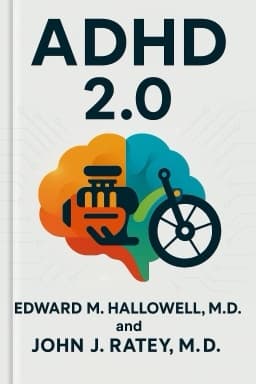
Unlocking the ADHD Mind: Surprising Truths That Will Change How You See It Forever
Discover the hidden gifts and paradoxes of ADHD, and learn how science and lifestyle combine to unleash true potential.

Imagine a brain wired not for uniformity but for vibrant diversity — a mind that races, wanders, and creates in ways that defy convention. This is the essence of ADHD, a condition often misunderstood as mere distraction or hyperactivity. But modern science reveals a far richer tapestry: ADHD is a spectrum of paradoxes and gifts that, when understood, unlocks immense potential.
The ADHD brain balances two major networks: the task-positive network (TPN), which drives focus and goal-directed action, and the default mode network (DMN), the source of daydreams, creativity, and rumination. In neurotypical brains, these networks toggle smoothly, but in ADHD, this switch is glitchy, causing simultaneous distraction and deep internal reflection. This explains the famous paradox where individuals can be both profoundly inattentive and hyper-focused.
Beyond this, the cerebellum—a small but neuron-rich brain region traditionally linked to movement—plays a crucial role in regulating cognition and emotion. Emerging therapies that stimulate the cerebellum through balance exercises and coordination training have shown promise in easing ADHD symptoms.
Yet, the journey to thriving with ADHD is not just neurological; it is profoundly social and emotional. Love and connection act as powerful medicines. Loneliness and trauma exacerbate symptoms, while nurturing relationships provide resilience and healing. The concept of “Vitamin Connect” underscores how positive social bonds are essential for brain health.
Nutrition, sleep, and structured environments form the foundation for managing ADHD. Consistent routines reduce chaos, balanced diets fuel brain chemistry, and restful sleep restores cognitive function.
Exercise emerges as a natural brain booster, increasing dopamine and brain-derived neurotrophic factor (BDNF), molecules critical for attention and learning. Regular physical activity is one of the most effective, accessible therapies available.
Medication, often feared, is actually the most powerful tool in the ADHD toolkit. When properly prescribed and monitored, stimulant medications dramatically improve focus and impulse control, reducing risks of substance abuse later in life.
Most importantly, embracing ADHD as a unique wiring rather than a deficit allows individuals to find their “right difficult” — challenges that engage their strengths and passions, leading to fulfilling, successful lives.
As research advances and stigma fades, the future of ADHD care looks bright. Integration of neuroscience, lifestyle, social support, and medication creates a holistic approach that empowers individuals to harness their gifts and live authentically.
This is the story of ADHD’s transformation from misunderstood disorder to celebrated difference. Embrace your brain’s unique rhythm and unlock the extraordinary within.
Sources: Latest ADHD research and expert consortium findings (2025) from Spark Mental Health, The New York Times, CHADD, and QBTech
1
2
3
4
Want to explore more insights from this book?
Read the full book summary