
The Age of Humans: How Gaia Vince’s Vision Will Change How You See the World
Why ‘Nomad Century’ and the Anthropocene Matter More Than Ever

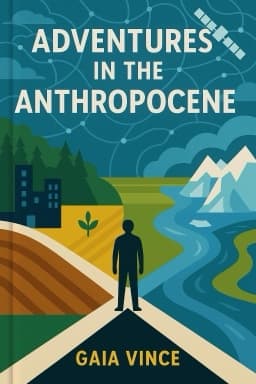
Imagine waking up each day knowing that your choices ripple across the entire planet. In ‘Nomad Century’, Gaia Vince paints a portrait of the Anthropocene—a time when humanity’s influence is so profound it rivals the forces that once shaped continents and carved oceans. The book’s opening chapters offer a sweeping history, from the first fires kindled by ancient humans to the dazzling web of satellites and cities that now light up the night sky. Vince’s message is clear: we are living in a new epoch, one defined not by ice or stone, but by us.
Vince takes us to the high Himalayas, where villagers build artificial glaciers to replace the ones lost to warming, and to river valleys where communities fight to restore the lifeblood of their lands. She describes the invisible oceans of air and information that connect us, from Wi-Fi signals in remote Nepalese villages to the brown haze that chokes megacities. Throughout, she asks: what does it mean to be the first species with the power to knowingly shape the destiny of life on Earth?
But ‘Nomad Century’ is not a tale of doom. Vince’s optimism shines in stories of grassroots innovation—solar panels lighting up off-grid homes, mobile phones bringing banking to the unbanked, and community engineers using local streams to generate clean power. She argues that our greatest asset is not just technology, but our capacity for adaptation, cooperation, and creativity. The Anthropocene, she insists, is an invitation to reimagine our relationship with the planet and each other.
Vince does not shy away from hard questions. Who pays the price for progress? How do we ensure justice for those most vulnerable to change? She highlights the growing movement for environmental justice, where communities demand a say in decisions that affect their lives. Her call for solidarity, empathy, and global cooperation is both urgent and inspiring.
In the final chapters, Vince invites us to imagine a flourishing Anthropocene—one where nature rebounds, cities and wilderness coexist, and hope is not naïve but a call to action. Her vision is grounded in science, yet animated by the belief that individuals, communities, and nations can choose a better path. ‘Nomad Century’ is more than a book; it’s a roadmap for the future, and a reminder that the story of the Anthropocene is still ours to write.
Ready to see the world differently? Dive into Gaia Vince’s vision and discover why the Anthropocene is both a warning and a promise.
Want to explore more insights from this book?
Read the full book summary