
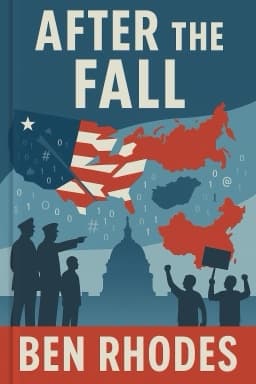
How ‘After the Fall’ Rewrites the American Story: Lessons for a World in Crisis
Why This Book Is a Must-Read for Anyone Worried About the Future of Democracy

Why This Book Is a Must-Read for Anyone Worried About the Future of Democracy
In the shadow of rising authoritarianism, ‘After the Fall’ stands as both a warning and a guide. The author, a former White House advisor, sets out on a journey that is at once deeply personal and profoundly global. He asks: How did the world’s oldest democracy come to mirror the very systems it once opposed? What subtle forces have chipped away at the pillars of American identity, and what can be done to restore them?
The book begins with a sense of exile, both literal and metaphorical. The author’s loss of professional purpose after leaving government service becomes a lens through which he views the broader dislocation experienced by millions. He travels to Budapest, Moscow, Hong Kong, and Havana, meeting activists, dissidents, and everyday citizens who have faced the slow, often invisible encroachment of authoritarian power. Their stories echo his own, revealing that the crisis is not uniquely American—it is global.
One of the most striking themes is how modern authoritarians use the tools of democracy—elections, courts, media—to entrench themselves. In Hungary, Viktor Orbán’s government rewrites the rules, redraws electoral districts, and controls the press, all under the guise of legality. In Russia, Putin’s regime perfects the art of disinformation, blurring the line between truth and fiction. In China, the state harnesses technology to surveil and control its citizens, exporting its model to eager autocrats around the world.
Yet, the book is not merely a catalog of decline. It is also a testament to resilience. In Hong Kong, the author joins young protesters risking everything for a taste of freedom. In Hungary, he meets journalists who continue to report the truth despite immense pressure. In America, he finds hope in the rise of grassroots movements that bridge old divides—Black Lives Matter, Me Too, and a new generation of climate activists. The lesson is clear: Change begins with small acts of courage, multiplied across communities and borders.
Throughout, the author weaves in his own reckoning with American identity. He grapples with the myth of exceptionalism, recognizing that America’s struggles are not so different from those of other nations. This humility becomes the foundation for renewal. By learning from the experiences of reformers abroad, Americans can find new models for democratic revival—ones that embrace pluralism, humility, and solidarity.
Ultimately, ‘After the Fall’ is a call to action. It urges readers not to despair, but to see themselves as agents of change. The book’s final chapters are filled with examples of hope: coalitions that cross ideological lines, international solidarity networks, and the daily practice of hope as a discipline, not just a feeling. In a world remade by crisis, the greatest power lies in our ability to connect, to resist, and to rebuild—together.
Read on for a deeper dive into the playbook of modern authoritarianism, the battle for identity in the digital age, and practical steps for defending democracy where you live.
Want to explore more insights from this book?
Read the full book summary