
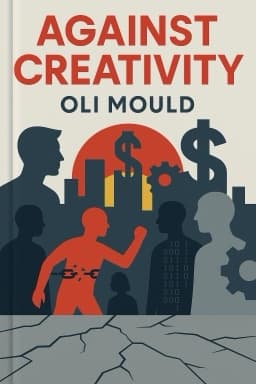
The Dark Side of Creativity: How Capitalism Hijacks Our Imagination
Unveiling the Hidden Costs of Creativity in a Market-Driven World

Creativity is often celebrated as the pinnacle of human achievement—a spark of genius that drives innovation, culture, and progress. But what happens when creativity itself is subsumed under the relentless logic of capitalism? Far from being a pure expression of freedom or inspiration, creativity today is frequently a tool for maintaining economic growth and reinforcing existing social hierarchies.
This image captures a stark reality: while creativity is glorified in capitalist societies, many who possess creative talents use them merely to survive, not to thrive. The homeless street performer’s song is not a ticket to Broadway stardom but a desperate means of subsistence. This illustrates a fundamental shift—creativity has been redefined from a divine or collective force into a commodity for economic production.
Historically, creativity was seen as a sacred act, a connection to the divine or a shared cultural heritage. Shakespeare’s plays were part of communal storytelling, not isolated genius. However, with the rise of capitalism, creativity became individualized and monetized. The 'creative genius' emerged as a figure whose value was measured by market success rather than social contribution.
Today, the rhetoric insists that everyone is creative, but this creativity is narrowly framed as a capacity to generate economic value. Creative industries dominate economies, yet they often produce more of the same—mass cultural products designed to fuel consumption rather than inspire true innovation.
Workplaces echo this contradiction. Open-plan offices and colorful co-working spaces promise autonomy and collaboration but mask intense competition and precarity. The 'creative class' is often privileged, masking deep inequalities and the casualization of labor. Academics, freelancers, and gig workers face unstable contracts and mental health challenges, revealing the human cost behind the glossy narratives of creative freedom.
Marginalized and diffabled communities challenge these norms by redefining creativity through difference. Deaf culture, synaesthesia, and neurodiversity offer alternative sensory experiences and socialities that resist capitalist normalization. Yet, even these radical forms of creativity risk being co-opted or tokenized within market logics.
Politics, too, has become a spectacle where creativity is reduced to image management. Reality TV-style debates and social media branding prioritize personality over policy, obscuring the devastating effects of austerity and social cuts. The spectacle distracts from real struggles, reinforcing capitalist power structures.
In the digital realm, algorithms mediate creativity by curating and commodifying content. While AI can generate art, it primarily serves capitalist interests by maximizing attention and profit. The sharing economy promises empowerment but often exploits labor and erodes traditional social bonds.
Urban creativity is similarly double-edged. Cities brand themselves as creative hubs, attracting investment through flagship cultural projects. However, this often leads to gentrification and displacement, with art used as a tool to sanitize neighborhoods and push out marginalized residents. Grassroots resistance uses creative activism to reclaim space and identity.
Yet amidst these contradictions lies hope. Radical collective creativity—autogestion, cooperative labor, and social movements like Occupy—demonstrate how creativity can be a force for emancipation. By resisting co-option and embracing difference, impossible creativity imagines futures beyond capitalism’s grasp.
This blog invites you to rethink creativity not as a commodity but as a collective, transformative power that challenges injustice and fosters new social worlds. The journey through these ideas reveals the urgent need to reclaim creativity for all, not just the privileged few.
Explore this critical perspective and join the conversation about creativity’s true potential in a world craving change.
Sources: Goodreads, Amazon reviews, Shelf Awareness 1 2 3
Want to explore more insights from this book?
Read the full book summary