
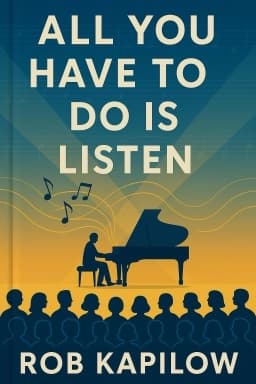
Unlocking the Hidden Stories in Every Song: The Power of Active Listening
Why every note matters—and how you can discover the secret narratives in your favorite music.

Why every note matters—and how you can discover the secret narratives in your favorite music
Imagine sitting in a room filled with the gentle glow of evening light, a symphony unfolding in the background. Most of us treat music as a pleasant backdrop—something to fill the silence while we work, drive, or relax. But what if every song, every symphony, every pop hit was a story waiting to be discovered? Active listening is the art of tuning in, not just to the sound, but to the hidden narratives, emotions, and connections woven into the music. This approach, championed by music educator Rob Kapilow, invites us to move from passive hearing to engaged listening, unlocking a world of meaning and self-healing.
Active listening begins with curiosity. Instead of letting music wash over you, try to notice the details: the way a melody returns with a twist, the sudden pause that creates tension, or the playful dialogue between instruments. These are not random events—they are the building blocks of musical storytelling. Just as a novelist uses plot and character, composers use repetition, variation, and contrast to guide your emotions and imagination. Every phrase, every silence, every musical joke is a clue to the story being told.
Scientific studies have shown that music memory is uniquely powerful. Unlike words, melodies and rhythms can be recalled after years of absence, triggering waves of nostalgia or recognition. This is why the return of a theme in a symphony can feel like meeting an old friend. Composers play with this emotional memory, bringing back motifs in new contexts to surprise and delight us. The more you listen, the more you notice these connections, and the richer your experience becomes.
But active listening is more than an intellectual exercise—it is a form of mindfulness. When you focus on the music, you become present, attentive, and open to emotion. Studies have found that mindful music listening can reduce stress, promote well-being, and even aid in recovery from trauma. Your playlist becomes a diary, each song a chapter in your life’s story, unique to you and your experiences. No two listeners hear the same piece in exactly the same way.
So how do you start? Begin by choosing a piece of music and giving it your full attention. Notice the opening—what mood does it set? Listen for repetition and variation. Where does the music pause, and where does it surge forward? Try to remember a theme or motif, and notice how it returns. Ask yourself: What is the story here? How does it make me feel?
As you practice, you’ll find that every piece of music becomes a new adventure, a personal journey of discovery. You’ll learn to appreciate not just the beauty of sound, but the depth of meaning that lies beneath. And in doing so, you’ll unlock the healing, transformative power of music—one note at a time.
Ready to start your journey? All you have to do is listen.
Want to explore more insights from this book?
Read the full book summary