
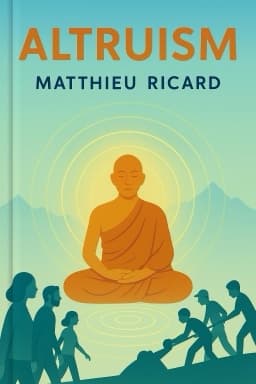
Why Altruism is the Superpower You Didn’t Know You Had
Discover the hidden science behind selfless acts and how they can transform your life and the world.

Discover the hidden science behind selfless acts and how they can transform your life and the world
Altruism is often misunderstood as a rare virtue, reserved for saints and heroes. But modern science reveals a much more hopeful truth: it is a universal capacity, hardwired into our biology, and accessible to everyone. Imagine a world where every person’s daily actions—no matter how small—contribute to a culture of care and connection. This is not a utopian dream, but a realistic vision grounded in decades of research.
From the moment we are born, we are wired to connect. Studies of infants show that even tiny babies respond to the distress of others with concern. In the animal kingdom, dolphins support injured peers, and elephants mourn their dead, revealing that the seeds of altruism are deeply rooted in nature. But what sets humans apart is our ability to extend this care far beyond our immediate circle, to strangers, distant communities, and even future generations.
Neuroscientists have discovered that when we practice kindness, our brains change. Regular acts of compassion strengthen neural pathways associated with empathy and emotional regulation. This means that the more we practice altruism, the easier—and more natural—it becomes. In workplaces, communities, and families, those who prioritize cooperation and mutual support report higher levels of happiness, better health, and longer lives.
But perhaps the most remarkable finding is that altruism is contagious. When we witness acts of kindness, our brains are primed to imitate them, creating a ripple effect that can transform entire cultures. This is the true superpower of altruism: it multiplies, inspiring others to follow suit and creating a cycle of goodwill.
So how can you tap into this power? Start with small, intentional acts—listening deeply to a friend, volunteering in your community, or simply offering a smile to a stranger. Over time, these habits become second nature, building a foundation for lifelong compassion.
Altruism is not a sacrifice; it is a source of strength and resilience. By choosing to care, you unlock a superpower that benefits not only others, but yourself. And as more people embrace this path, the world becomes a brighter, more hopeful place for all.
Ready to discover your own superpower? Start today, and watch how your world transforms.
References: Ricard, M. (2015). Altruism: The Power of Compassion to Change Yourself and the World.
1
2
3
Want to explore more insights from this book?
Read the full book summary