
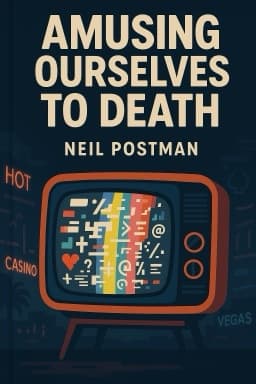
Is TV Killing Democracy? Neil Postman’s Stark Warning About Entertainment Culture
How Television’s Demand for Entertainment Undermines Public Discourse

Neil Postman famously asserted that television is 'our culture’s principal mode of knowing about itself.' But this mode comes with a price: the transformation of public discourse into entertainment. Television’s demand for entertainment means that news, politics, and religion are packaged as spectacles, prioritizing image and emotion over substance and reason.
News broadcasts employ the 'Now... This' technique, abruptly shifting from serious stories to trivial ones, creating a fragmented and incoherent narrative that confuses viewers about what matters. Political campaigns focus on charisma, appearance, and soundbites, reducing complex issues to superficial performances. Religious programming turns into celebrity-driven shows, emphasizing personality over theology.
This entertainment culture undermines democracy by eroding the public’s capacity for critical thinking and informed participation. When citizens receive information as amusement rather than serious engagement, the foundations of democratic deliberation weaken. The public becomes passive consumers rather than active participants.
Postman’s warning is a call to action: to cultivate media literacy, demand higher standards of public discourse, and resist the allure of trivial entertainment. By understanding television’s influence, we can seek to restore depth and seriousness to democracy.
This blog explores these themes in depth, drawing on Postman’s analysis and contemporary media critiques to illuminate the stakes and suggest paths forward.
Sources: Want to explore more insights from this book?