
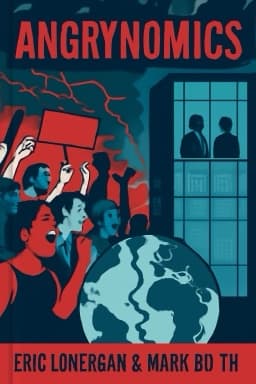
How Economic Crashes Shape Our Moods: Lessons from Angrynomics
From the Great Depression to Today—Why Every Crash Leaves Us More Divided (and What We Can Learn)

From the Great Depression to Today—Why Every Crash Leaves Us More Divided (and What We Can Learn)
Economic crises are more than numbers on a chart—they are turning points that shape how we feel, vote, and relate to each other. In 'Angrynomics,' Eric Lonergan and Mark Blyth argue that every financial crash is a reset moment, exposing the bugs in our economic operating system and forcing society to rethink its values and institutions.
The authors trace the history of capitalism through three main 'versions.' The first, in the late 19th and early 20th centuries, was marked by minimal regulation and brutal cycles of boom and bust. When the Great Depression hit, millions lost jobs and hope, fueling a wave of public anger that led to the New Deal and the creation of safety nets. This second version promised stability and rising prosperity, but by the 1970s, inflation and labor disputes revealed new weaknesses.
Version three began in the 1980s, with deregulation, globalization, and a belief in market efficiency. For a while, it seemed to work—growth returned, and new technologies flourished. But beneath the surface, inequality grew, wages stagnated for many, and debt piled up. The 2008 crisis was the inevitable reckoning, exposing just how fragile the system had become.
Each crash leaves a legacy of anger. Some of it is moral outrage at injustice—think of the Occupy movement or protests against austerity. But much of it is tribal, exploited by those seeking to divide rather than unite. The result is a society where trust in elites, experts, and even neighbors is eroded.
Lonergan and Blyth warn that unless we learn from these cycles, we risk repeating them. They call for a new reset—one that addresses inequality, invests in public goods, and gives everyone a stake in the future. The lesson of angrynomics is not just that anger is inevitable after a crash, but that it can be harnessed for renewal—if we act wisely.
References: IMF Book Review, Blinkist, Stumbling and Mumbling
Want to explore more insights from this book?
Read the full book summary