
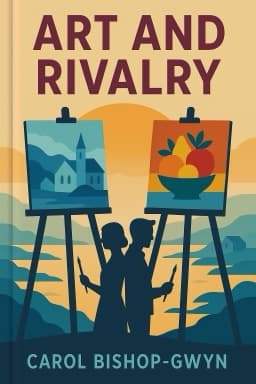
Inside the Turbulent Love and Art of Mary & Christopher Pratt: How Rivalry Forged Canadian Masterpieces
Unmasking the Passion, Competition, and Pain Behind Two of Canada’s Greatest Artists

Unmasking the Passion, Competition, and Pain Behind Two of Canada’s Greatest Artists
In the annals of Canadian art, few stories are as gripping as that of Mary and Christopher Pratt. Their journey began in the hallowed halls of Mount Allison University, where two young talents—Mary, with her luminous sense of color and domestic intimacy, and Christopher, with his architectural precision and cool restraint—first crossed paths. Their early connection was electric, a blend of admiration and subtle rivalry that would define their lives together.
As newlyweds, the Pratts set off for Scotland, where Christopher pursued further studies and Mary juggled motherhood and her own artistic ambitions. Letters home chronicled their struggles—financial, emotional, creative. Returning to Newfoundland, they built a life in rural Salmonier, turning isolation into a crucible for creativity. The wild light and landscape of Newfoundland seeped into their canvases, each painting a testament to the beauty and hardship of their chosen home. Their partnership was both supportive and competitive; each respected the other’s talent, but neither was content to play a secondary role.
Their marriage, however, was tested by more than artistic ambition. The arrival of Donna Meaney, first as a helper and then as Christopher’s muse and lover, ruptured the fragile balance. The affair became public knowledge, and the pain was palpable. Yet, astonishingly, both Mary and Christopher responded by painting Donna—each rendering her in their own distinct style. Mary’s paintings, in particular, glowed with a haunting intimacy, transforming betrayal into art that captivated critics and audiences alike. The Pratts’ personal turmoil became a national conversation about art, gender, and the cost of genius. 1 2 3
In the end, the Pratts’ story is one of survival and transformation. Their rivalry was not a destructive force, but a crucible that forged some of the most enduring images in Canadian art. Their legacy lives on in the works that grace museums, in the students they inspired, and in the ongoing conversation about what it means to create—and to live—authentically. Their lives remind us that art is not born of comfort, but of struggle, honesty, and the courage to face even the deepest wounds. 4
Want to explore more insights from this book?
Read the full book summary