
Unmasking AI: The Environmental and Human Costs You Never Knew
How AI’s invisible foundations threaten our planet and people

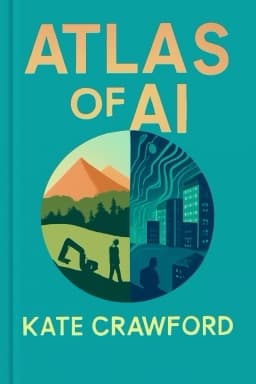
Artificial Intelligence, celebrated as a driver of modern innovation, often glosses over the profound environmental and human costs embedded in its creation and operation. Kate Crawford’s Atlas of AI reveals these hidden layers, forcing us to confront the dark side of our digital age.
The extraction of minerals like lithium, cobalt, and rare earth elements powers the batteries and hardware essential for AI systems. However, these mining processes devastate ecosystems, contaminate water sources, and generate vast toxic waste. For instance, in Inner Mongolia, a massive artificial lake holds 180 million tons of toxic black mud — a byproduct of rare earth processing crucial to AI components.
But the environmental toll is only half the story. AI’s labor force is vast and frequently invisible. In fulfillment centers, workers endure intense physical demands and constant algorithmic monitoring, often leading to injuries and burnout. Meanwhile, digital crowdworkers worldwide perform repetitive microtasks for minimal pay, underpinning AI’s data needs without recognition or protections.
This dual burden of environmental harm and labor exploitation illustrates that AI’s promises come at a significant cost. Crawford’s work calls for a reevaluation of AI’s value systems, advocating for transparency, fair labor standards, and environmental stewardship as integral to AI’s future.
Understanding these realities is crucial not only for policymakers and technologists but also for consumers whose daily lives are intertwined with AI. Recognizing AI’s material and social footprint empowers us to demand more ethical and sustainable practices.
As AI continues to expand its reach, the choices we make today will determine whether technology serves humanity equitably or deepens existing injustices.
Sources: Technology Review, ScienceDirect
Want to explore more insights from this book?
Read the full book summary