
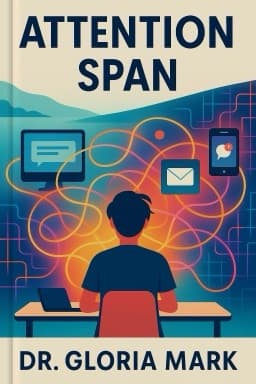
Why Your Attention Span is Shrinking and How to Take It Back NOW!
Discover the hidden science behind your wandering mind and proven strategies to reclaim your focus in a fractured digital world.

Have you ever found yourself endlessly scrolling your phone, jumping between tasks, or struggling to finish a single project without distraction? You’re not alone. Modern life bombards us with stimuli designed to fracture our attention, and the science behind this phenomenon reveals a complex interplay of brain networks, psychological tendencies, and digital design.
The Architecture of Attention
Our brain’s attention system is a delicate orchestra of networks responsible for alerting us to important stimuli, orienting our focus, and exerting executive control to resist distractions. Maintaining focus is metabolically costly, requiring increased blood flow and energy. As we push ourselves to sustain attention, cognitive resources deplete, leading to fatigue and errors. This means your willpower isn’t infinite; it’s a precious resource that needs nurturing and replenishment.
The Myth of Multitasking
Contrary to popular belief, multitasking is a costly illusion. What we really do is rapid task switching, which fragments attention and increases errors. Research shows that people now switch their attention on screens every 40 to 50 seconds, a drastic decline from the 2.5-minute spans of two decades ago. Each switch demands cognitive reorientation, leaving behind 'attention residue' that impairs performance and raises stress levels.
The Psychological Weight of Unfinished Tasks
Ever wonder why interrupted tasks haunt your mind? The Zeigarnik effect explains this phenomenon: unfinished tasks create psychological tension, keeping them vividly active in memory and pulling your focus away from current work. Both external and self-generated interruptions contribute to this tension, making it crucial to manage not only external distractions but also internal impulses.
Social and Technological Forces
Algorithms and social media platforms exploit our psychological vulnerabilities by personalizing content and offering intermittent social rewards like likes and comments. This creates powerful habit loops that keep users hooked, often prioritizing digital personas over real-life goals. Understanding these forces helps us reclaim agency over our attention.
Personality, Self-Regulation, and Mindfulness
Your unique personality traits influence how you manage distractions and multitasking. Conscientiousness correlates with better focus, while neuroticism may increase vulnerability to distraction. Self-regulation is a finite but trainable resource. Mindfulness meditation enhances meta-awareness and resilience against distraction, acting as mental training for your attention muscles.
Media Conditioning and Cultural Impact
The rapid pace of modern media—movies, TV, online videos—conditions our brains for constant novelty and quick shifts. Average shot lengths have dropped from 12 seconds in the 1930s to under 4 seconds today, fostering kinetic attention and fragmenting focus. Recognizing this helps us seek balance by incorporating slower, reflective activities.
Strategies to Reclaim Your Attention
Replenishing cognitive resources through rest, nature exposure, and simple rote activities is essential. Organizational policies like email batching and Right to Disconnect laws help reduce overload. Emerging AI tools promise personalized attention coaching. Cultivating agency through goal setting, rhythm alignment, and self-compassion empowers sustained focus and well-being.
By understanding the science and culture of attention, you can design your life to support focus, creativity, and joy in a fractured digital world.
Want to explore more insights from this book?
Read the full book summary