
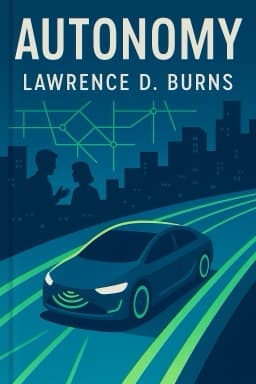
The Untold Story of the DARPA Grand Challenge: How a Desert Race Sparked the Self-Driving Revolution
From Robot Meltdowns to World-Changing Breakthroughs

Most people think the self-driving car was born in Silicon Valley, but its true birthplace was the unforgiving Mojave Desert. In the early 2000s, the U.S. government’s DARPA Grand Challenge offered a million-dollar prize to anyone who could build a robot car capable of crossing 150 miles of rugged terrain—no driver allowed. The result? Chaos, camaraderie, and a cascade of innovation that would change the world.
The first race was a disaster: robots caught fire, veered into fences, and stalled within sight of the starting line. Not a single vehicle finished. Yet, that spectacular failure was the catalyst the industry needed. Teams learned, adapted, and returned stronger. By the next year, several vehicles completed the course, proving that autonomy was possible.
What happened in the desert didn’t stay in the desert. The algorithms, hardware hacks, and team spirit forged there became the foundation for the modern self-driving stack. Engineers from these teams went on to lead Google’s and Uber’s autonomous projects, and their breakthroughs—sensor fusion, real-time mapping, behavioral planning—are now industry standards.
But the real story is about people: students skipping class to solder wires, veterans sharing war stories, rivals becoming friends over late-night debugging sessions. The DARPA Grand Challenge wasn’t just a race; it was a crucible where the impossible became inevitable.
Today, as we ride in prototype AVs through city streets, it’s worth remembering that every smooth ride owes a debt to the wild, dusty chaos of those early days. The desert race may be over, but its legacy is just beginning.
Sources: Autonomy: The Quest to Build the Driverless Car—And How It Will Reshape Our World, Bookrunch overview, AI Startups, Sanfoundry 1 2 3
Want to explore more insights from this book?
Read the full book summary