
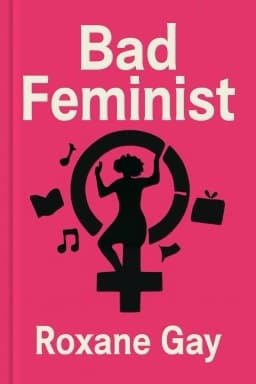
Why Embracing Your Inner 'Bad Feminist' is the Revolutionary Act We All Need
Discover how Roxane Gay’s 'Bad Feminist' challenges perfectionism in feminism and invites us all to embrace complexity and contradiction.

In a world that often demands perfection, Roxane Gay’s Bad Feminist offers a refreshing and revolutionary perspective: feminism does not require flawlessness. Instead, it thrives on the messy, complicated experiences of real people. Gay's essays peel back the layers of societal expectations, revealing feminism as a pluralistic, evolving conversation rather than a rigid doctrine.
Gay openly embraces the label of 'bad feminist' because she recognizes her own contradictions and flaws. This acceptance is a powerful act of self-love and solidarity, inviting others to join in a feminism that is inclusive and realistic. It challenges the notion that to be a feminist, one must reject all aspects of culture that conflict with feminist ideals. Instead, it acknowledges that one can enjoy music, movies, and other cultural expressions while still advocating for gender equality.
Moreover, Gay distinguishes between feminism as a broad social movement and the public personas of professional feminists, who may sometimes fall short of feminist ideals. Understanding this distinction helps prevent disillusionment and encourages continued engagement with feminist principles.
By embracing imperfection, feminists can foster honest dialogue, build inclusive communities, and create a movement that reflects the diversity of experiences and identities. Bad feminism is not a retreat from feminist values but a bold step toward a more authentic and compassionate future.
This approach aligns with intersectional feminism, which recognizes overlapping identities and experiences of privilege and marginalization. It calls for empathy, nuance, and a refusal to police others' journeys.
In conclusion, Roxane Gay’s Bad Feminist invites us to reconsider what it means to be a feminist, urging us to embrace our contradictions and imperfections as sources of strength rather than shame.
Explore more about how imperfection can empower feminist activism and personal growth, and learn why embracing your inner 'bad feminist' might just be the most radical act you can perform today.
Sources: 1 , 2 , 4
Want to explore more insights from this book?
Read the full book summary