
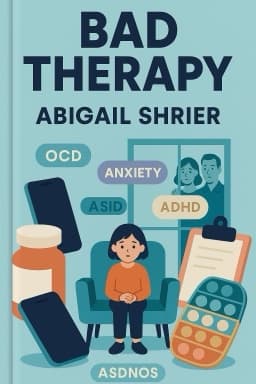
Why ‘Bad Therapy’ Is Shaking Up Parenting: The Surprising Risks of Too Much Help
How Modern Parenting and Therapy Culture May Be Hurting Our Kids More Than Helping

How Modern Parenting and Therapy Culture May Be Hurting Our Kids More Than Helping
In recent years, the American parenting landscape has undergone a seismic shift. Where once children were expected to tough out life’s bumps and bruises, today’s parents are often told to validate every feeling, seek therapy at the first sign of distress, and treat even ordinary childhood struggles as symptoms of deeper issues. This is the world Abigail Shrier explores in her provocative book, Bad Therapy: Why the Kids Aren’t Growing Up.
Shrier’s central argument is both simple and unsettling: our well-intentioned efforts to protect children from pain may actually be making them weaker. She traces the origins of therapeutic parenting to the rise of the self-esteem movement in the late 20th century, combined with the explosion of mental health awareness in schools and media. The result? A generation of kids who are more anxious, less resilient, and more likely to see themselves as fragile or broken.
Consider the statistics: rates of ADHD, anxiety, and depression among children have doubled or even tripled in recent decades. Millions of children are now diagnosed with psychiatric disorders and prescribed medication, often for behaviors that would once have been considered normal. Shrier argues that this diagnosis deluge is not just a reflection of increased awareness, but a cultural shift that encourages children to see themselves through the lens of pathology rather than possibility. 2
One of the book’s most controversial claims is that therapy itself can sometimes do harm. Drawing on research and personal stories, Shrier describes how some children emerge from therapy more anxious, more dependent, or even estranged from their families. She introduces the concept of iatrogenesis—harm caused by the healer—and warns that therapy, like any powerful intervention, must be used wisely and sparingly. She cites cases where therapists, in their zeal to help, inadvertently encourage children to dwell on their pain, mistrust their parents, or adopt a diagnosis as a core part of their identity. 1
Schools play a major role in this new therapeutic culture. Social-emotional learning (SEL) programs now occupy a central place in classrooms, with teachers acting as emotional guides and counselors offering therapy during the school day—sometimes without parental knowledge. While these programs aim to support students, Shrier questions whether they sometimes blur the line between education and therapy, and whether they might inadvertently increase anxiety by encouraging children to focus excessively on their emotions. 4
Yet, Shrier’s message is not one of despair. She emphasizes that most children are naturally resilient, and that adversity—handled with love and boundaries—can be a powerful teacher. She advocates for a return to authoritative parenting: setting clear rules, offering warmth, and trusting children to handle setbacks. She encourages parents to trust their instincts, resist the pressure to medicalize every struggle, and focus on building real coping skills.
Critics of Bad Therapy argue that Shrier underestimates the value of mental health support, especially for children facing real trauma or mental illness. But even many mental health professionals agree that over-diagnosis and unnecessary therapy can be counterproductive. The challenge, then, is to find balance: to support children in need, while also fostering independence and resilience in the majority who will recover on their own. 2 4
In a world awash in advice, Bad Therapy offers a refreshing reminder that sometimes, less is more. By reclaiming parental authority, trusting our instincts, and believing in our children’s strength, we can help them grow into confident, capable adults—ready to face whatever life brings.
SEO Keywords: Bad Therapy book review, Abigail Shrier parenting, mental health risks children, therapeutic culture, childhood resilience
Want to explore more insights from this book?
Read the full book summary