
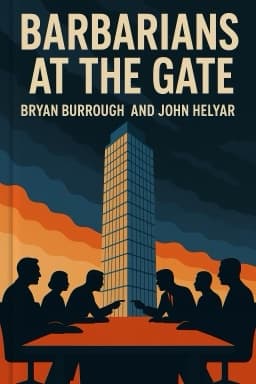
Inside the Billion-Dollar Battle: How RJR Nabisco's Leveraged Buyout Changed Corporate America Forever
A deep dive into the explosive corporate saga that redefined power, money, and ambition in the 1980s.

The 1980s were a decade marked by rapid change, bold ambitions, and unprecedented financial innovation. At the heart of this era’s corporate drama lies the story of RJR Nabisco, a conglomerate whose leveraged buyout became the largest and most talked-about takeover in history. This saga is not just about money; it’s a riveting narrative of personalities clashing, cultures colliding, and the very fabric of American business being rewoven.
Ross Johnson, a charismatic and unconventional leader, emerged as a disruptor in the corporate world. His rise was anything but typical — a late bloomer who leveraged charm, creativity, and a flair for the dramatic to shake up the stodgy norms of corporate America. His leadership style, marked by raucous meetings and lavish entertaining, symbolized the new breed of executives focused on deals and shareholder value over tradition.
Meanwhile, Reynolds Tobacco, steeped in Moravian values of thrift, community, and conservatism, represented the old guard. Its unique culture, where employees were 'reluctant millionaires' holding majority voting shares, created a tight-knit but resistant-to-change environment. The merger between Reynolds and Nabisco was more than a business deal — it was a cultural collision that exposed deep divisions in management styles, pay scales, and corporate philosophy.
The ensuing leveraged buyout was a financial spectacle fueled by Wall Street’s innovative use of junk bonds and complex securities. Multiple parties, including Johnson’s management group and private equity giants like Kohlberg Kravis Roberts (KKR), engaged in a fierce bidding war. The stakes were astronomical — the deal valued at $25 billion, tripling previous takeover records.
Within the boardroom, tensions soared as directors grappled with their fiduciary duties, management’s secret profit arrangements, and the pressure from shareholders and the media. The legal and ethical challenges underscored the complexities of corporate governance during such transformative events.
Wall Street’s role was pivotal. Investment banks like Shearson Lehman and First Boston orchestrated the financing and advisory efforts, leveraging new financial instruments to make the impossible possible. This era’s financial engineering would set precedents for decades to come, demonstrating both the power and peril of aggressive deal-making.
In the aftermath, RJR Nabisco faced enormous debt, restructuring, and cultural shifts that tested its resilience. The story serves as a timeless lesson in leadership, ethics, and the unpredictable nature of change in corporate America.
Understanding the RJR Nabisco buyout is essential for anyone interested in business history, finance, or leadership. It reveals how ambition, innovation, and human dynamics intertwine to shape the destiny of companies and economies. This saga remains a powerful mirror reflecting the challenges and opportunities that define corporate life.
For more detailed insights and stories from this epic tale, explore the following sections, each unpacking a unique facet of the deal and its legacy.
Sources: Medium article on Barbarians at the Gate 1 , Instaread summary 2 , Getfluently insights 3 , BSPE Club analysis 4
Want to explore more insights from this book?
Read the full book summary