
Unlocking the Invisible Hand: How Prices Shape Our World Without You Noticing
Dive into the silent language of prices that orchestrate our daily lives and global economies.

Have you ever wondered how billions of people across the globe manage to coordinate the production and consumption of countless goods and services without a single central authority telling them what to do? The answer lies in the subtle yet powerful mechanism of prices. Prices are the invisible hand guiding economic activity, conveying information that no government or planner could possibly gather in time.
Imagine a bustling marketplace where countless vendors offer their wares and millions of consumers make purchasing decisions. No one is directing the flow, yet somehow, the right amount of food, clothing, and other essentials appear in the right places at the right times. This magic is the result of prices adjusting in response to supply and demand.
Prices rise when goods become scarce or demand surges, signaling producers to increase output or new suppliers to enter the market. Conversely, prices fall when supply exceeds demand, signaling producers to cut back or consumers to buy more.
Take, for example, the global steel market. When a rich iron ore deposit is discovered in one country, steel prices worldwide tend to drop, even if most consumers are unaware of the discovery. This price change encourages manufacturers everywhere to adjust their production, demonstrating how prices link distant economies in a seamless network.
However, prices are often misunderstood. Many blame sellers for high prices, assuming greed or unfairness. Yet, competition among sellers ensures that prices reflect real economic conditions rather than arbitrary decisions. If a seller charges too much, buyers simply go elsewhere, keeping prices in check.
Understanding the invisible hand of prices is not just an academic exercise; it empowers us to see the economy as a living, breathing system where countless individual decisions combine to create order from apparent chaos. This insight is the foundation for appreciating how markets work and why interventions often have unintended consequences.
Next, we will explore how competition and costs shape prices, revealing the natural limits on pricing power and the true role of market forces in balancing supply and demand.
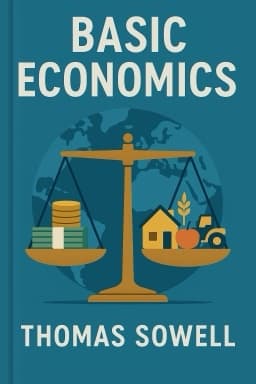
Sources: Basic Economics by Thomas Sowell 1 , 2 , 3
Want to explore more insights from this book?
Read the full book summary