
How the Internet Turned Us All Into Linguists (Without Us Even Noticing)
The secret science behind your texts, tweets, and memes—and why you’re smarter than you think.
The secret science behind your texts, tweets, and memes—and why you’re smarter than you think.
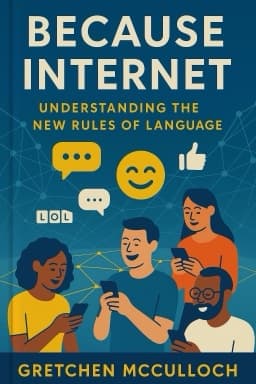
If you’ve ever debated the meaning of a period at the end of a text, noticed a new slang word spreading through your group chat, or tweaked your emoji use to fit in with friends, congratulations: you’re a linguist. As Gretchen McCulloch’s Because Internet shows, the internet has turned everyone into a language scientist, analyzing, adapting, and inventing on the fly.
Online, we’re constantly negotiating tone, meaning, and etiquette—often without realizing it. We notice when a new meme catches on, when a word changes meaning, or when a certain style of punctuation feels off. We adapt our language for different audiences, switch between registers, and even invent new words to capture new experiences.
Digital Communities as Linguistic Labs
Online communities are living laboratories for language change. Memes, slang, and new forms travel through networks of strong and weak ties, spreading rapidly and evolving with each new use. Every message, post, and reply is an experiment in meaning and connection.
Patterns in the Noise
Even the most chaotic-seeming trends—like keysmashes or viral abbreviations—follow hidden rules and patterns. By paying attention to these patterns, we gain insight into how language works and how people connect.
Conclusion: The Science of Everyday Speech
You don’t need a PhD to be a linguist. Every time you adapt your language, analyze a new trend, or invent a word with friends, you’re participating in the science of language. The internet has made us all scholars of our own speech—and that’s something worth celebrating.
Want to explore more insights from this book?
Read the full book summary