
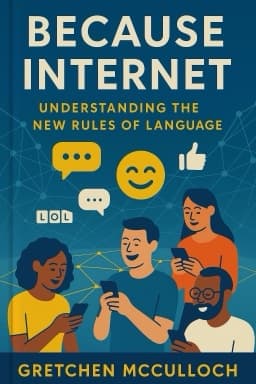
Why a Period at the End of Your Text Might Sound Rude (and Other Surprising Rules of Internet Language)
Explore the subtle, ever-changing rules that shape how we sound online—and why they matter.
Explore the subtle, ever-changing rules that shape how we sound online—and why they matter.
It’s just a dot. How could it possibly cause so much drama? Yet in today’s digital conversations, the period at the end of a text is loaded with meaning—sometimes more than the words themselves. According to Gretchen McCulloch’s Because Internet, the period is only the beginning of a whole new etiquette that governs how we sound, feel, and connect online.
Consider this: you send a cheerful message—'See you soon!'—and your friend replies, 'Okay.' Suddenly, you wonder: are they upset? Did you do something wrong? In the age of texting, every mark matters. For many younger users, a lone period can feel abrupt, cold, or even passive-aggressive. For older generations, it’s just good grammar. The gap in interpretation is a microcosm of the internet’s living, evolving rules.
From Shouting to Softening: All Caps, Lengthening, and Emoji
It’s not just the period. All caps, once reserved for shouting, can now signal excitement, joy, or even affection—depending on the context and the relationship between sender and receiver. Expressive lengthening, like 'hellooooo' or 'noooooo wayyyyy', is a way to add warmth, playfulness, or emphasis that plain text can’t provide. Emoji and acronyms like 'lol' or 'brb' help soften messages, clarify tone, and invite connection.
These conventions aren’t handed down by grammarians—they emerge from the collective practice of billions of users, shaped by context, platform, and social group. What’s friendly in one chat might seem rude or confusing in another. The only constant is change—and the need to pay attention to the subtle cues that shape how we’re heard.
Generational Gaps and Digital Negotiation
The rules of digital etiquette are especially tricky across generations. For digital natives, a message without emoji or expressive punctuation might feel flat or even cold. For older users, a string of exclamation marks can seem excessive. The negotiation of tone is an ongoing dance, requiring empathy, curiosity, and a willingness to learn from each other.
Why It Matters: Connection, Clarity, and Kindness
Understanding these evolving rules isn’t just about avoiding misunderstandings—it’s about forging real connection. The way we use punctuation, caps, and emoji is a reflection of our desire to be clear, kind, and understood. As McCulloch shows, digital etiquette is a living language, shaped by our shared need for warmth and clarity in a world where words are all we have.
Conclusion: The Art of Being Understood Online
So next time you agonize over a period, an exclamation mark, or a string of emoji, remember: you’re not just following rules—you’re helping to write them. The art of digital etiquette is the art of being understood, and in a world where so much depends on words, that’s a skill worth mastering.
Want to explore more insights from this book?
Read the full book summary