
You’re Probably Speaking Internet: How Digital Language Is Changing Us All
Discover the surprising ways the internet has transformed everyday language—and what it reveals about who we are.

Discover the surprising ways the internet has transformed everyday language—and what it reveals about who we are.
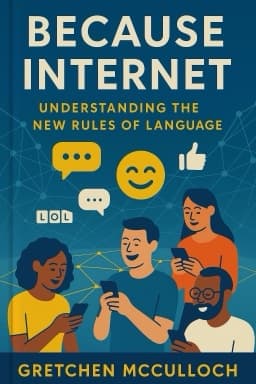
Have you ever sent a text message that just said 'lol', stretched out a word for emphasis ('soooo cute'), or added a string of emoji to make your point? If so, you’re part of a linguistic revolution—one that Gretchen McCulloch captures brilliantly in her book Because Internet. The internet hasn’t just changed how we communicate; it’s changed what it means to use language itself. Every text, tweet, and meme is a small act of authorship, and nearly everyone who posts online is, in some sense, a published writer. In this blog, we’ll explore how digital language is transforming us all, from the way we express emotion to the way we build communities and pass on culture.
The Quiet Revolution: Everyone a Writer
Once, writing was a formal, intimidating affair—reserved for school essays, business letters, or the occasional diary entry. Today, thanks to the internet, writing is woven into the fabric of daily life. We text our friends, comment on posts, and organize everything from birthday parties to protests through quick, informal messages. This explosion of informal writing has made language more democratic and creative than ever. As McCulloch notes, the internet has given us permission to write as we speak: casually, playfully, and without fear of the red pen.
Patterns in the Chaos: Keysmash, Slang, and the New Rules
But even in this freedom, patterns emerge. Take the keysmash—those joyful, seemingly random bursts of letters like 'asdfjkl;' that signal excitement or exasperation. They might look chaotic, but research shows most people unconsciously follow patterns, starting with 'a' or sticking to the home row. Even in chaos, there’s social order. Similarly, the way we use periods, exclamation marks, and even all caps online can dramatically shift the tone of a message. A period at the end of a text can feel cold or abrupt to younger users, while older generations see it as just good grammar. These tiny details are the new etiquette, negotiated in real time by billions of users.
Language and Belonging: Networks, Familects, and Memes
The internet doesn’t just connect people; it shapes the very words we use. Social networks—both online and off—are the engines of language change. Strong ties, like family and close friends, help reinforce shared words and habits (what linguists call a 'familect'). Weak ties—acquaintances, online friends, distant connections—act as bridges, carrying new words and trends across communities and continents. Memes, in particular, are the wildflowers of internet culture, spreading inside jokes and playful language at lightning speed. They’re not just entertainment—they’re cultural time capsules, preserving the humor, anxieties, and values of our era for future generations.
Bridging Generations: The Five Internet Cohorts
Not everyone came online at the same time. McCulloch identifies five generations of internet users, from the early pioneers who built the first forums and adopted mysterious pseudonyms, to today’s digital natives for whom online and offline life are seamlessly intertwined. Each group brings its own customs, slang, and attitudes toward privacy and identity. The result? A rich, sometimes bewildering tapestry of digital language, where a single phrase or emoji can mean wildly different things depending on who’s using it.
Restoring Gesture and Emotion: Emoji, Gifs, and the Visual Renaissance
One of the most striking changes brought by the internet is the return of gesture and emotion to written language. Emoji, gifs, and memes let us show a smile, a sigh, or a playful tease—restoring the nonverbal cues lost in plain text. The most popular emoji worldwide are faces and hands, mimicking the gestures and expressions of real-life conversation. Gifs act as digital body language, while memes twist language in creative, rule-breaking ways that foster in-group belonging and rapid cultural evolution.
Language, Literacy, and the Future
Far from eroding traditional literacy, internet language keeps us engaged and creative. Studies show that people who use slang, emoji, and playful spelling often perform just as well—or better—on conventional reading and writing tasks. The internet is a living laboratory for language, a place where new forms and customs blossom every day. What’s polite, funny, or meaningful today may shift tomorrow, and that’s not a failure—it’s a sign of life.
Conclusion: The Human Story Behind the Screen
In the end, the story of internet language is the story of us—our adaptability, creativity, and longing to connect. Every message, meme, and emoji is a thread in the vast tapestry of human communication. As McCulloch reminds us, language isn’t just about rules—it’s about people. So next time you text, tweet, or share a meme, remember: you’re not just using language. You’re shaping it, and you’re part of a living, evolving story that belongs to us all.
Want to explore more insights from this book?
Read the full book summary