
Beyond Opposites: The Mind-Blowing Truth About Oneness and Nonduality
How all your perceived differences are just illusions masking the ultimate unity beneath.

Envision a cosmic panorama where stars, galaxies, and earthly landscapes blend seamlessly. At the center, a meditating figure dissolves into the cosmos, symbolizing the unity of self and universe. Colors swirl in an ethereal dance, illustrating interconnectedness and oneness.
Brahman, the ultimate reality in Hindu philosophy, is described as made of everything—light and darkness, desire and peace, virtue and vice. Nothing is excluded; all dualities coexist within this essence.
This realization transforms our understanding of life. We are not isolated individuals but integral parts of an indivisible unity. The famous phrase 'Tat tvam asi'—'That art thou'—reminds us that our innermost being is identical with the cosmic whole.
Recognizing this oneness frees us from spiritual pride and division, inviting humility and openness to life’s complexity. It allows freedom to embrace all aspects of existence without conflict.
By embracing this unity, we step beyond opposites and experience life as a harmonious whole.
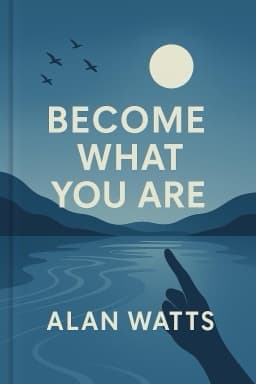
Want to explore more insights from this book?
Read the full book summary