
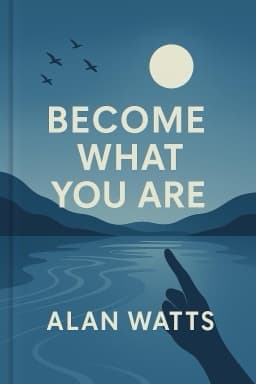
Unlocking the Paradox of Self: How Losing Yourself Leads to True Freedom
Discover why the most profound spiritual truth is that you must lose yourself to truly find yourself.

Imagine standing at the edge of a vast plain under a twilight sky. Nearby, an iron bull stands unmoved, its hide impervious and unyielding. A tiny mosquito buzzes close, attempting to bite, yet the bull remains untouched. This metaphor captures a profound spiritual truth: the ego, like the iron bull, resists change by force, and the mosquito’s futile attempts symbolize the ego’s struggle to control or renounce itself by sheer will.
Many spiritual seekers try to force themselves to change, to renounce desires, or to suppress the self, believing effort is the key. Yet, as ancient Buddhist poems remind us, 'He that loseth his soul shall find it.' The moment of surrender is not a goal but a natural realization that the ego cannot master itself through effort. This surrender is a paradoxical strength born of acceptance and honesty.
Consider the mosquito’s attempt to bite the iron bull’s thick hide. No matter how persistent, the mosquito cannot penetrate. Similarly, the ego’s attempts to force self-transcendence only reinforce its grip. Freedom blooms only when the ego stops struggling and lets go.
This paradox is the cornerstone of spiritual awakening. It teaches us that life begins when we stop trying to control life. The ego’s illusion of control is shattered, and in that shattering, a new life emerges — one of openness, presence, and peace.
As we explore deeper, this surrender connects with living fully in the present moment, the eternal Now, where past and future dissolve and life is experienced as infinite and eternal. The journey from self-denial to presence is the gateway to true harmony and freedom.
Want to explore more insights from this book?
Read the full book summary