
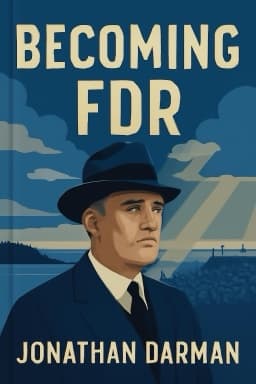
How Franklin D. Roosevelt's Polio Battle Shaped a Presidency That Changed America Forever
Discover the untold story of how personal adversity forged an extraordinary leader who steered America through its darkest hours.

Introduction: The Making of a Leader
Born into privilege in the serene Hudson Valley, Franklin D. Roosevelt’s early years were marked by a paradox of luxury and loneliness. His mother’s insistence on pleasantness as a condition for affection instilled in him a profound emotional intelligence that would later become essential in his political life.
Early Political Ambitions and Harsh Realities
Roosevelt’s initial foray into politics was shaped by the shadow of his famous cousin, Theodore Roosevelt, and the cutthroat nature of New York’s political scene. Despite adopting a similar style and rhetoric, he struggled to achieve meaningful legislative success. A vivid example is the 1919 parade incident where political rivals sidelined him, illustrating the brutal realities of political theater.
The Life-Altering Polio Diagnosis
In 1921, Roosevelt’s life changed dramatically when he was struck by polio during a family vacation on the remote island of Campobello. Initial misdiagnoses delayed treatment, and the geographical isolation compounded his vulnerability. The illness brought not only physical paralysis but also emotional turmoil, forcing Roosevelt to confront his own fragility.
Recovery and Reinvention at Warm Springs
Roosevelt’s recovery was a slow, painful process centered around hydrotherapy at Warm Springs, Georgia. Though he never regained full use of his legs, the therapy symbolized hope and renewal. His physical limitations forced him to adapt, using braces and wheelchairs with careful public image management.
Eleanor Roosevelt: The Partner Who Transformed Politics and Marriage
Parallel to Franklin’s transformation was Eleanor Roosevelt’s evolution from a shy socialite to a powerful political partner and activist. Their marriage, tested by illness and infidelity, was redefined as a partnership based on mutual respect and shared mission.
The Political Resurrection and Rise to National Leadership
Against all odds, Roosevelt’s 1928 gubernatorial victory marked a stunning political comeback. Through strategic image management and public appeal, he overcame skepticism about his disability. His tenure as governor laid the groundwork for his presidential ambitions.
The Presidency: Hope, Communication, and Lasting Legacy
Roosevelt’s presidency during the Great Depression was defined by bold New Deal reforms and innovative communication through Fireside Chats. Despite his physical limitations, he projected strength and empathy, restoring national morale.
Conclusion: The Enduring Power of Resilience
Franklin D. Roosevelt’s life is a profound lesson in the power of resilience, empathy, and reinvention. From childhood emotional conditioning to overcoming polio and redefining leadership, his story shows how personal adversity can become a source of strength and inspiration. His legacy reminds us that true leadership is forged not in comfort but in challenge and that hope can light the darkest of times.
Want to explore more insights from this book?
Read the full book summary