
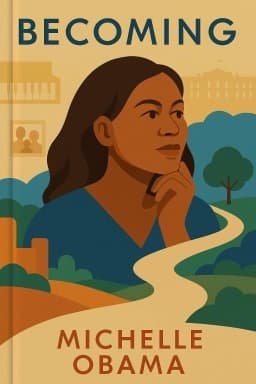
The Untold Truths of Michelle Obama’s ‘Becoming’: What You Didn’t Realize
Uncover surprising insights and lesser-known aspects of Michelle Obama’s memoir that reveal deeper layers of her journey.

While Michelle Obama’s memoir Becoming is celebrated for its inspiring narrative, it also contains subtle yet profound truths often overlooked. One such truth is the complexity of language as a marker of identity. Michelle’s reflection on being asked,
Moreover, the memoir candidly addresses the burden of representation. As one of few African Americans in predominantly white educational and professional settings, Michelle experienced the pressure to conform while maintaining her identity. This duality required resilience and adaptability, shaping her approach to leadership and public life.
The memoir also exposes the paradoxes of public visibility. Life in the White House brought both privilege and confinement, with constant media scrutiny and security measures intruding on private moments. This reality underscores the sacrifices inherent in public service, particularly for women of color navigating historically exclusive spaces.
These lesser-known aspects enrich the memoir’s narrative, offering a more textured understanding of Michelle Obama’s journey. They invite readers to reflect on broader social issues such as race, gender, and power, and the personal costs of leadership. By engaging with these truths, we gain a fuller appreciation of the memoir’s impact and relevance.
For more critical perspectives, consult reviews at Vox, The Guardian, and Canecto.[[3]](#__3) [[1]](#__1) [[0]](#__0)
Want to explore more insights from this book?
Read the full book summary