
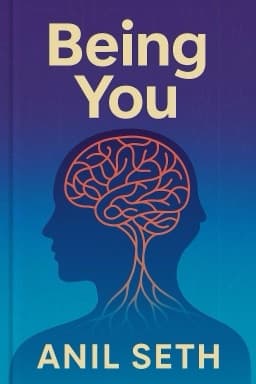
The Self Illusion: How Your Brain Invents ‘You’ Every Moment
Are you who you think you are? The neuroscience of the self, explained.

Are you who you think you are? The neuroscience of the self, explained.
The feeling of being 'me' is so immediate, so continuous, that we rarely question it. But what if the self is less a thing and more a story—a process built moment by moment by the brain? Anil Seth’s research suggests just that. The self, he argues, emerges from the brain’s predictions about the body’s internal state (interoception) and its ongoing integration of sensory information.
Consider the rubber hand illusion: by synchronizing touches on a hidden real hand and a visible fake one, people begin to feel the rubber hand as their own. This simple trick exposes the brain’s remarkable flexibility in constructing the sense of body ownership. Similarly, our emotions and moods are shaped by the brain’s interpretation of bodily signals—a fluttering heart, a tight chest, a deep breath.
The self is not fixed. It is a living process, shaped by memory, expectation, and social context. In altered states—dreams, meditation, or under psychedelics—our sense of self can dissolve and reform, revealing its true nature as a dynamic construction.
Understanding the self as a process can foster empathy and resilience. It helps us recognize that change is possible, that our identities are not prisons, and that compassion—for ourselves and others—is a natural response to the fluidity of being.
The next time you feel anxious or lost, remember: your sense of self is not a fixed object, but a dance of prediction and sensation—a story that can be rewritten with each new experience.
References: Being You by Anil Seth, LSE Review
1
, Mountains & Rivers Review
2
Want to explore more insights from this book?
Read the full book summary