
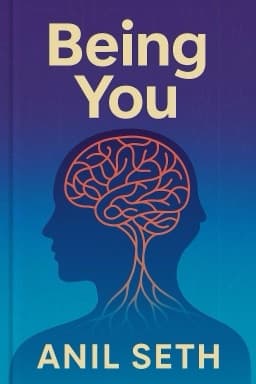
Unlocking the Mystery: Why Consciousness Remains the Final Frontier of Science
Despite decades of research, the science of consciousness is just getting started.

Despite decades of research, the science of consciousness is just getting started.
For centuries, consciousness has been called the 'hard problem.' How does subjective experience—what it feels like to be you—arise from the activity of the brain? Anil Seth’s 'Being You' surveys the latest breakthroughs and enduring mysteries. Scientists have mapped the neural correlates of consciousness, developed mathematical models like Integrated Information Theory, and built brain-based tools to measure awareness. Yet the central question remains: why does any of this give rise to experience at all?
The challenge is not just technical, but philosophical. Thought experiments like the philosophical zombie and the question 'what is it like to be a bat?' show the limits of objective science when it comes to subjective experience. Still, progress is being made—new brain imaging techniques, computational models, and interdisciplinary collaborations are opening doors.
Understanding consciousness matters. It shapes how we see ourselves, how we treat others, and how we design future technologies. The journey is far from over, but each step brings us closer to answering the most profound question of all: what does it mean to be conscious?
References: Being You by Anil Seth, LSE Review
1
, Mountains & Rivers Review
2
, Anil Seth’s official site
3
Want to explore more insights from this book?
Read the full book summary