
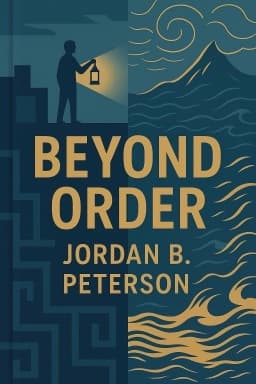
Is ‘Beyond Order’ the Most Controversial Self-Help Book of the Decade?
Why Peterson’s New Rules Ignite Passion and Debate

Why Peterson’s New Rules Ignite Passion and Debate
Few authors polarize readers like Jordan Peterson. With ‘Beyond Order’, he dives even deeper into the debates that have made him a global phenomenon—and a lightning rod for criticism. The book’s central message, that tradition and order are necessary for a stable society, has been praised by some as common sense and condemned by others as reactionary.
Peterson’s critics argue that his reverence for social institutions and hierarchies ignores the ways these systems can perpetuate inequality and injustice. They point to his skepticism of radical change and his warnings against ‘careless rebellion’ as evidence that he’s out of touch with modern struggles. On the other hand, his supporters see him as a voice of reason in a chaotic world, valuing his insistence on personal responsibility, discipline, and the wisdom of tradition.
The controversy extends to Peterson’s views on gender roles, family structure, and the nature of suffering. Some accuse him of reinforcing stereotypes or downplaying social progress, while others believe his focus on individual agency is empowering. The debates play out not just in book reviews, but in classrooms, online forums, and media interviews around the world.
Yet, beneath the controversy, ‘Beyond Order’ offers nuanced arguments about the need for balance: between order and chaos, tradition and innovation, individual and community. Peterson’s willingness to tackle uncomfortable truths and challenge prevailing narratives is part of what makes the book so compelling—and so divisive.
Whether you agree with Peterson or not, ‘Beyond Order’ is a book that demands engagement. It raises questions about the foundations of society, the limits of change, and the search for meaning in a turbulent world. Love it or hate it, you can’t ignore it.
References: Medium, Thinkr, Readingraphics, 101 Planners
Want to explore more insights from this book?
Read the full book summary