
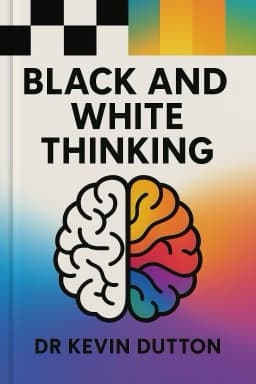
From Black and White to Shades of Grey: Mastering the Art of Cognitive Flexibility
How embracing cognitive flexibility can improve your mental health and decision-making skills.

Rigid black and white thinking often leaves us trapped in cycles of anxiety, conflict, and poor decision-making. But there's a way out — cognitive flexibility, the ability to adapt our thinking, entertain multiple perspectives, and embrace ambiguity.
Cognitive flexibility is linked to improved mental health outcomes. Those who can shift their thinking patterns experience less anxiety, better problem-solving abilities, and greater emotional resilience. For instance, flexible thinkers can reframe setbacks as learning opportunities rather than failures.
Moreover, this mental agility enhances social relationships. By moving beyond rigid categories, we develop empathy, understanding that people and situations are rarely purely good or bad. This reduces interpersonal conflicts and fosters cooperation.
Developing cognitive flexibility involves mindfulness practices that increase awareness of automatic thought patterns. Techniques such as journaling, perspective-taking exercises, and exposure to diverse viewpoints can also help.
Ultimately, mastering cognitive flexibility equips us to navigate a complex world with grace. It allows us to see beyond black and white, appreciate the richness of life’s greys, and make wiser, more compassionate choices.
Sources: sobrief.com 1 , amazon.com 2 , bookey.app 3
Want to explore more insights from this book?
Read the full book summary