
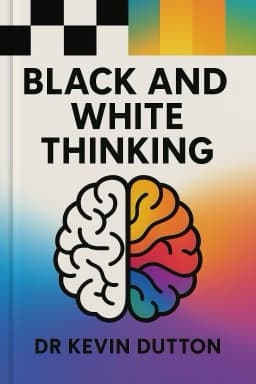
The Hidden Trap of Black and White Thinking: How It Shapes Our Reality and What to Do About It
Explore the paradoxes and pitfalls of binary thinking and discover tools to embrace life's complexities.

Our brains are wired to simplify the world through categorization, dividing experiences into neat boxes of black and white. This tendency is both a blessing and a curse. While it helps us make quick decisions, it also blinds us to the subtlety and complexity that characterize most of life.
One of the most profound challenges to binary thinking is the Sorites paradox — the problem of defining when a collection of grains becomes a heap. This paradox reveals that many categories we rely on lack sharp boundaries. Yet, humans crave certainty and clear definitions, often forcing rigid lines where none exist.
Adding to this is Weber's Law, which explains that our perception only notices changes above a certain threshold. This sensory limitation compels our brains to lump continuous variations into discrete categories, sometimes inaccurately.
Language plays a pivotal role in shaping these mental categories. The words we choose frame reality and influence how others perceive it. For example, framing a situation as a 'secret' versus a 'surprise' triggers different social behaviors, demonstrating language’s power to manipulate cognition.
Understanding these mechanisms is crucial because binary thinking extends beyond cognition into social realms. It underpins group identity, fostering in-group loyalty but also out-group hostility. This dynamic is exploited in politics, religion, and media, often escalating conflicts and polarization.
Fortunately, awareness of these cognitive traps opens the door to change. Cultivating cognitive flexibility — the ability to hold multiple perspectives and adapt to new information — helps us navigate the grey areas. Practices like mindfulness, reflective thinking, and deliberate reframing of language can enhance this flexibility.
By embracing ambiguity and complexity, we enrich our understanding and promote empathy. This shift is essential for healthier social interactions and personal growth.
References: sobrief.com 1 , amazon.com 2 , bookey.app 3
Want to explore more insights from this book?
Read the full book summary