
Unlocking the Secret to Market Domination: How Blue Ocean Strategy Can Make Your Competition Irrelevant
Discover the transformative power of creating uncontested market space and why competing less can mean winning more.

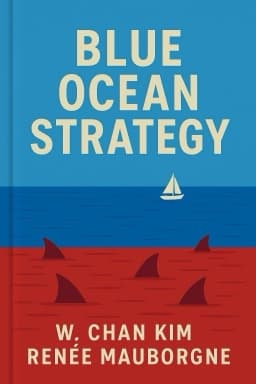
In today’s hyper-competitive world, businesses often find themselves locked in fierce battles over shrinking market shares. This intense rivalry creates what is known as a red ocean — a metaphor for oversaturated markets where competitors fight tooth and nail, driving down profits and commoditizing products. But what if you could sail away from this bloody sea and discover a vast, calm blue ocean of untapped opportunity? This is the promise of Blue Ocean Strategy, a groundbreaking concept that shifts the focus from beating the competition to making the competition irrelevant.
The core idea is value innovation — creating leaps in value for customers while simultaneously reducing costs. This breaks the traditional trade-off between differentiation and low cost, enabling companies to open new market spaces that competitors have not yet explored. For example, Cirque du Soleil combined the circus and theater to create a sophisticated entertainment experience that appealed to adults and corporate clients, far removed from traditional circuses. Similarly, Southwest Airlines revolutionized short-haul air travel by offering low-cost, convenient flights, attracting customers who previously preferred driving or other modes.
But how do you systematically create these blue oceans? The strategy introduces the six paths framework, guiding businesses to look across alternative industries, strategic groups, buyer groups, complementary offerings, functional-emotional appeals, and time trends. This approach helps break free from industry assumptions and discover new demand.
Visualizing your strategy is equally important. The strategy canvas maps the current competitive landscape and highlights where companies converge or diverge in their offerings. Paired with the four actions framework — eliminate, reduce, raise, create — businesses can reconstruct buyer value elements to craft unique value curves that unlock blue oceans.
Growth is accelerated further by reaching beyond existing customers to noncustomers, who are categorized into three tiers: soon-to-be, refusing, and unexplored. Focusing on commonalities among these groups rather than differences among current customers aggregates demand and maximizes market size.
Ensuring your blue ocean strategy delivers value and profit requires following a strategic sequence: exceptional buyer utility, strategic pricing within the 'price corridor of the mass,' target costing to maintain profitability, and overcoming adoption hurdles through clear communication and incentives. Leadership plays a critical role in overcoming organizational hurdles — cognitive, resource, motivational, and political — by leveraging tipping point leadership to mobilize key influencers and create rapid change.
Finally, fair process principles — engagement, explanation, and expectation clarity — build trust and voluntary cooperation, vital intangible assets that enable smooth execution. Sustaining blue oceans demands alignment of value, profit, and people propositions, along with continuous renewal to stay ahead of imitators and evolving markets.
By embracing Blue Ocean Strategy, you embark on a journey from crowded competition to uncharted growth, transforming your organization and reshaping your industry.
Ready to navigate your own blue ocean? Dive deeper into the strategy’s frameworks, tools, and inspiring examples in the following sections of this blog series.
Want to explore more insights from this book?
Read the full book summary