
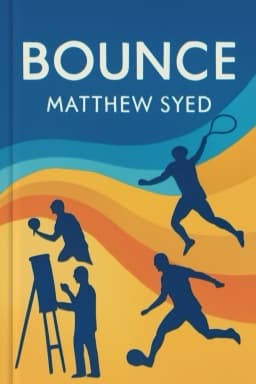
The Shocking Science of Choking: Why We Fail When It Matters Most (And How to Stop)
Unlocking the Mind’s Paradoxes to Perform Your Best When the Stakes Are High

Have you ever blanked out during an important exam, missed an easy shot in a crucial game, or stumbled over your words in a job interview? You’re not alone. In 'Bounce,' Matthew Syed explores the mysterious and maddening phenomenon of 'choking'—the sudden, inexplicable collapse of performance when the stakes are highest. But why does this happen, and more importantly, how can we prevent it?
Choking is not a sign of weakness or lack of preparation. In fact, it often strikes the most dedicated and talented individuals. The culprit? Overthinking. Under normal circumstances, our skills—whether in sports, music, or public speaking—are executed automatically, honed through thousands of hours of practice. But when pressure mounts, our conscious mind tries to take control, dissecting each movement and second-guessing every decision. This conscious interference disrupts the smooth flow of performance, leading to mistakes, hesitation, and sometimes, heartbreak.
Syed draws on real-world examples, from Olympic athletes to concert pianists, to show that choking is universal. But he also offers hope: mindfulness and mental rituals can help performers stay present and trust their training. Techniques like focusing on the process (not the outcome), using breathing exercises, and developing pre-performance routines have been shown to reduce anxiety and restore flow.
The blog also explores the placebo effect—how belief in a ritual or treatment, even if it has no physical basis, can boost performance by calming nerves and enhancing focus. Syed’s insights are backed by scientific studies and interviews with top performers, making a compelling case for the power of the mind in both sabotaging and saving our performance.
If you want to perform your best when it matters most, start by building routines that center you, practicing mindfulness, and reframing pressure as a challenge rather than a threat. With these tools, you can turn the mind from a saboteur into your greatest asset. For further reading, check out expert reviews and discussion guides for 'Bounce.' 2 1
Want to explore more insights from this book?
Read the full book summary