
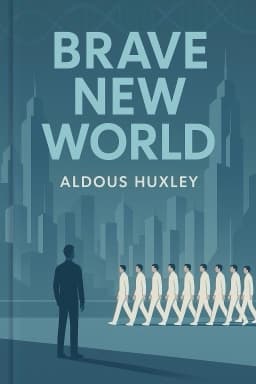
Why ‘Brave New World’ Is More Relevant Than Ever
A 21st Century Perspective on Huxley’s Dystopia

As we scroll through our feeds, binge-watch new shows, and navigate a world shaped by algorithms, Aldous Huxley’s ‘Brave New World’ seems less like a distant dystopia and more like a prescient warning. The book’s vision of a society where comfort, pleasure, and efficiency trump all other values has become startlingly familiar. In the World State, individuality is sacrificed for the collective good, and the pursuit of happiness is state-mandated. Today, we see echoes of this in the rise of surveillance capitalism, the normalization of mood-altering substances, and the relentless drive for productivity and consumption.
The Seduction of Comfort
Huxley’s citizens live in a world free from pain—but also free from meaning. The constant availability of soma, the drug that erases negative emotions, mirrors our own society’s reliance on pharmaceuticals, entertainment, and digital distraction. The question is not just whether we are happy, but whether our happiness is real—or simply engineered by those in power.
State and Corporate Control
The World State’s leaders control every aspect of life, from birth to death. Today, governments and corporations wield unprecedented influence over our choices, desires, and even our thoughts. Surveillance, data mining, and targeted advertising shape our behavior in ways that would have astonished even Huxley.
The Loss of Individuality
Perhaps the most chilling aspect of the novel is its depiction of a world where individuality is not just discouraged but actively suppressed. In our own time, social media can enforce conformity and punish dissent, while the pressure to fit in is stronger than ever.
The Enduring Questions
‘Brave New World’ forces us to confront uncomfortable questions: Is it better to be comfortable or to be free? Can a society that values pleasure above all else create true happiness? And what is the cost of sacrificing individuality for stability?
As we move deeper into the 21st century, these questions grow more urgent. Huxley’s vision is not inevitable, but it is a warning we ignore at our peril.
References: SparkNotes, Medium, The Artifice
Want to explore more insights from this book?
Read the full book summary