
Why 'Brave, Not Perfect' Will Change How You See Courage Forever
Unlock the secrets to breaking free from perfectionism and embracing a bolder, braver life.

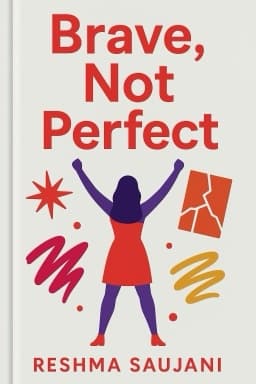
Imagine a world where the pressure to be perfect no longer suffocates the spirit of women everywhere. This is the bold vision that Reshma Saujani presents in her transformative book, Brave, Not Perfect. In this extensive exploration, we unpack the roots of perfectionism, the cultural forces that shape it, and the revolutionary idea that bravery—not flawlessness—is the path to a fulfilling life.
From early childhood, girls are socialized to prioritize safety, politeness, and perfection. They are taught to avoid mistakes and to seek approval, which sets up a lifetime of fear-driven behavior. By contrast, boys are encouraged to take risks, fall, and get back up. This conditioning is subtle yet powerful, creating an inner critic in girls as early as age eight that equates mistakes with failure. The impact of this early training is profound, leading many women to live cautiously, avoiding challenges that could reveal imperfections.
Social media and popular culture amplify these pressures, bombarding young women with images of flawless beauty and effortless success. Princess culture, for example, reinforces passivity and appearance-focused values, while stories of male heroes dominate narratives of courage and adventure. The lack of relatable, brave female role models limits girls’ visions of what they can achieve, trapping them in a cycle of comparison and self-doubt.
Adult perfectionism often masquerades as excellence but carries a heavy emotional toll. Women juggle multiple roles, striving to be perfect employees, mothers, partners, and friends, often at the expense of their own happiness and health. The myth that perfection equals success leads to paralysis by analysis, fear of failure, and avoidance of leadership opportunities. Yet, true excellence embraces imperfection and growth, inviting us to reframe failure as a necessary step rather than a verdict.
The book challenges the narrow definition of bravery as physical daring, expanding it to include emotional courage, vulnerability, and everyday acts of boldness. Bravery is not innate or biologically predetermined; it is a skill that can be developed through mindset shifts and practice. Each act of courage, no matter how small, strengthens our resilience and inspires others, creating a ripple effect of empowerment.
Building bravery involves adopting a growth mindset, embracing imperfection, and consistently stepping outside comfort zones. Physical self-care—such as sleep and mindfulness—supports this mental transformation. Practical tools like journaling and recognizing the power of 'yet' help reframe challenges and reduce fear.
Importantly, the book advocates for embracing failure as a path to growth. Failure rewires the brain, encouraging creative problem-solving and resilience. Celebrating effort rather than flawless outcomes nurtures perseverance and self-compassion, freeing us from the paralysis of perfectionism.
Another critical barrier to bravery is the need to please others. Chronic people-pleasing leads to emotional exhaustion and diminished self-worth. Learning to say no and trust one’s instincts is an act of courage that fosters authenticity and leadership success.
Finally, 'Brave, Not Perfect' emphasizes the power of community—'Team Brave'—where shared vulnerability and support amplify individual courage. Recovering from setbacks involves grieving, reframing, reconnecting with purpose, and trying again, all within a safe, empowering network.
In summary, Reshma Saujani’s message is clear and inspiring: perfection is a prison, bravery is a muscle, and every woman deserves the freedom to live boldly and imperfectly. This book is a call to action to embrace courage, fail forward, and rewrite the stories we tell ourselves about what it means to be brave.
Whether you are a young girl just beginning to see the world or a woman navigating the complexities of adulthood, these insights offer a roadmap to a richer, more courageous life.
For anyone ready to break free from the shackles of perfection and step into their authentic power, this journey is essential.
1 , 2 , 3
Want to explore more insights from this book?
Read the full book summary