
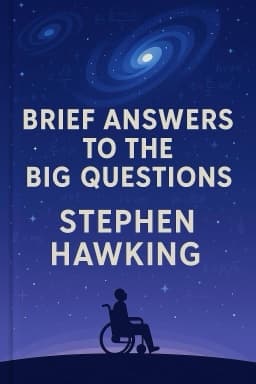
Is There a God? What Stephen Hawking Really Said—and Why It Matters
A clear-eyed look at one of the most controversial questions in modern science.

Few questions spark as much debate as the existence of God. In 'Brief Answers to the Big Questions,' Stephen Hawking addresses this head-on, bringing clarity to a subject often clouded by emotion and dogma. Hawking explains that the universe is governed by unbreakable laws—laws that require no divine intervention to function. He draws on the Big Bang theory and quantum mechanics to show that time and space themselves began with the universe, making the idea of a ‘before’ or an external creator unnecessary. Yet, Hawking’s use of the word ‘God’ is deeply philosophical: he speaks of ‘knowing the mind of God’ as a metaphor for understanding the laws of nature. This approach bridges the gap between science and spirituality, offering a poetic sense of wonder without resorting to supernatural explanations. Hawking’s respectful tone and reliance on evidence invite readers to find meaning in the universe’s order, beauty, and mystery. The blog also explores how Hawking’s ideas fit within the broader conversation between science and religion, highlighting the value of humility, curiosity, and open-mindedness.
Hawking’s answer is not a denial of meaning, but an invitation to seek awe and purpose in the universe itself. Whether you are a believer, a skeptic, or somewhere in between, his perspective challenges you to think more deeply about what it means to exist—and why asking questions is the highest form of faith.
Want to explore more insights from this book?
Read the full book summary