
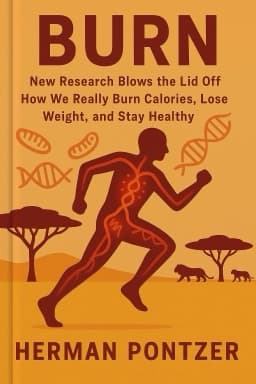
Inside Your Metabolic Engine: How Your Body Burns Energy and Why It Matters
A deep dive into the cellular and evolutionary science behind your metabolism and daily energy burn.

From Mitochondria to Movement: The Science of Metabolism
Every second, your body is engaged in a vast, invisible dance of energy conversion. At the microscopic level, mitochondria within your cells act as power plants, transforming nutrients into adenosine triphosphate (ATP), the energy currency of life. These organelles evolved from ancient bacteria that formed a symbiotic relationship with early cells, enabling complex life forms to thrive.
But metabolism is not just about tiny machines inside cells. It’s also about how your whole body manages energy. The brain, though small in size, consumes about 20% of your resting metabolic energy, while the liver and heart also demand significant fuel. Fat tissue, often blamed for weight gain, is actually metabolically quiet, burning far fewer calories than muscle or organs.
One of the most counterintuitive facts is how fat is lost during weight loss. When you burn fat, the molecules don’t simply vanish; they are broken down into carbon dioxide and water.
Primate metabolism provides another intriguing perspective. Compared to other mammals of similar size, primates—including humans—have evolved to burn roughly half the calories daily. This slow metabolic rate supports longer lifespans and slower growth, reflecting evolutionary trade-offs that favor survival in complex environments.
Movement, too, has a predictable energy cost. Walking burns about 0.36 kilocalories per pound per mile, while running costs roughly double that. Surprisingly, no matter how experienced you are, your body doesn’t become significantly more efficient at walking or running, underscoring the evolutionary optimization of locomotion.
Recognizing these metabolic truths helps us understand why weight management is not just about willpower or exercise but about respecting the body's intricate energy balance. By appreciating the science beneath the surface, we can make informed choices that support health and longevity.
Want to explore more insights from this book?
Read the full book summary