
The Metabolism Myth Busted: Why Exercise Isn’t the Weight Loss Hero You Thought
Discover the surprising truth about metabolism and why moving more alone won’t melt your fat away.

Unpacking the Complex Science Behind Your Body’s Energy Use
Have you ever felt frustrated after hours at the gym, expecting the scale to drop, only to be met with stubborn weight? You’re not alone. For years, the simplistic 'calories in, calories out' model dominated health advice, suggesting that if you just moved more, you’d lose weight effortlessly. But what if your body is smarter than that? What if it’s designed to maintain energy balance no matter how hard you push?
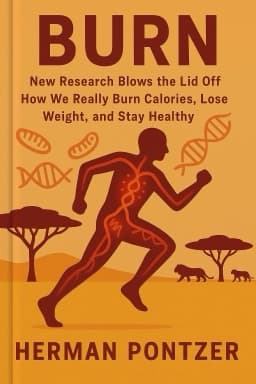
In his book Burn: The Misunderstood Science of Metabolism, Herman Pontzer, an evolutionary anthropologist and metabolic researcher, dismantles these myths with compelling evidence. His research with hunter-gatherer populations like the Hadza in Tanzania shows that despite their high levels of physical activity, their total daily energy expenditure is similar to that of sedentary Westerners. This discovery upends the idea that exercise significantly boosts metabolism in a straightforward way.
Why does this happen? Pontzer explains that our bodies have evolved a metabolic constraint system. When you increase activity, other physiological processes dial down to conserve energy, keeping total calorie burn within a relatively narrow range. This adaptive mechanism helped our ancestors survive periods of famine and scarcity by preventing excessive energy depletion.
Moreover, Pontzer reveals that basal metabolic rate—the energy your body uses just to keep your organs running at rest—accounts for the lion’s share of daily calorie expenditure. The brain, liver, heart, and kidneys are metabolic powerhouses, consuming far more energy than muscles at rest. Fat tissue, in contrast, is metabolically quiet. This means that changes in body composition, such as gaining muscle or fat, can influence your metabolism, but not always in ways people expect.
One of the most surprising insights is how fat is lost: when you burn fat, most of it leaves your body as carbon dioxide through your breath, not sweat or urine. This fascinating fact underscores the intimate connection between breathing and metabolism.
Modern diets, rich in processed foods and sugars, further complicate this picture. Our evolutionary metabolism is not adapted to handle hyper-palatable, calorie-dense foods that promote overeating and metabolic imbalance. Exercise alone cannot offset these dietary challenges, highlighting the critical importance of mindful nutrition.
In summary, Burn teaches us that metabolism is not a simple calculator but a dynamic, adaptive system shaped by millions of years of evolution. Weight management requires a holistic approach that respects this complexity, balancing movement, diet, and rest. So next time you lace up your running shoes, remember: your body’s energy story is far richer and more fascinating than you imagined.
Want to explore more insights from this book?
Read the full book summary