
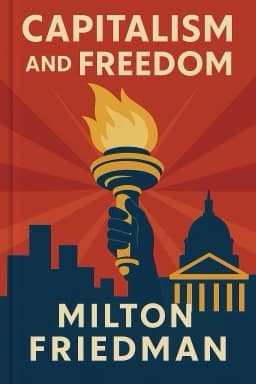
The Hidden Dangers of Government Overreach: Lessons from Capitalism and Freedom
Unpacking why too much government control threatens the very freedoms it aims to protect.

Government is necessary, but its power is a double-edged sword.
Fiscal policy, often wielded as a tool for economic stabilization, too frequently becomes a source of instability. Political pressures push for spending increases during recessions and resist cuts during expansions, leading to growing deficits and economic distortions.
Monetary policy, when left to discretionary control, has historically exacerbated crises rather than preventing them. The Federal Reserve’s failures during the Great Depression stand as a stark warning.
In education, government monopolies limit choice and innovation, resulting in inefficiencies and lower quality. Friedman’s voucher system proposes a market-based alternative that empowers parents and schools alike.
Trade restrictions and exchange controls, often introduced to protect domestic interests, pave the way to authoritarian economic policies by concentrating power and restricting freedom.
As citizens and policymakers, understanding these dynamics is crucial to safeguarding liberty in an era of expanding government ambitions.
Want to explore more insights from this book?
Read the full book summary