
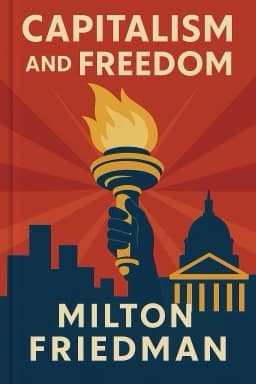
Unlocking Liberty: How Capitalism Fuels Political Freedom and Why It Matters Today
Explore the profound connection between economic liberty and political freedom through the lens of Milton Friedman's groundbreaking work.

Freedom is often spoken of as a political ideal, but its roots dig far deeper into the economic soil.
Imagine a society where every individual can engage in voluntary exchange, coordinate with others without coercion, and protect their property and rights under impartial laws. This is not a utopia but a practical framework that history confirms time and again. Ancient Greece and Rome, the rise of Western democracies, and modern capitalist societies all demonstrate that political freedom thrives where economic freedom flourishes.
Markets act as a dispersal mechanism for power. Unlike political systems that often concentrate authority, economic freedom spreads power among countless actors. This diffusion prevents tyranny by enabling individuals to sustain themselves independently and support causes, even unpopular ones. For example, controversial ideas can find financial backing and public voice through market mechanisms, safeguarding freedom of expression.
However, freedom is delicate and requires a vigilant guardian—the government. But this guardian's role must be carefully limited to rule-making and umpiring.
Monetary policy exemplifies this balance. The gold standard, once seen as a stable anchor, consumed vast resources and was never fully automatic. The discretionary powers of central banks, such as the Federal Reserve, have sometimes deepened economic crises, notably during the Great Depression. Friedman argues for rule-based monetary control, where legislated constraints replace arbitrary decisions, ensuring stability and accountability.
On the global stage, free trade and floating exchange rates emerge as pillars of economic freedom. Exchange controls often mark the start of authoritarian economic policies, restricting individuals and businesses. Floating rates allow automatic adjustment to market conditions, preventing distortions and political conflicts while promoting prosperity.
Fiscal policy, too, is a double-edged sword. Government spending has grown dramatically, yet political pressures often distort its stabilizing role, increasing instability. Taxation, with its automatic revenue fluctuations, can serve as a more effective balance wheel if applied wisely.
Education presents a microcosm of these themes. While some government involvement is justified due to social benefits, monopolies in schooling restrict choice and innovation. Market-based solutions like vouchers can enhance quality and equity, empowering parents and fostering competition.
Finally, capitalism's role in social justice is profound. Markets reduce discrimination by prioritizing productivity and quality, protecting minorities better than many political interventions. Monopolies, often sustained by government support, threaten freedom, underscoring the need for policies promoting competition.
Want to explore more insights from this book?
Read the full book summary