
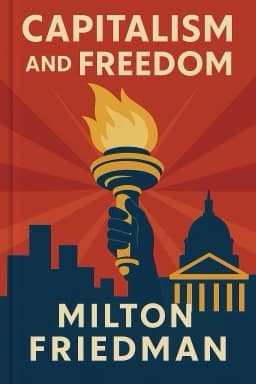
Why Milton Friedman’s Capitalism and Freedom Is More Relevant Than Ever in 2025
A deep dive into how Friedman's insights illuminate the challenges and opportunities of our modern world.

In a world grappling with inflation, geopolitical tensions, and evolving technology, revisiting Milton Friedman’s classic work offers profound insights.
Friedman’s critique of government overreach rings especially true as many nations wrestle with expanding state roles in healthcare, education, and welfare. His warning against the concentration of power is a clarion call to those who cherish democracy.
Monetary policy continues to challenge policymakers. The Federal Reserve’s unprecedented interventions during recent crises echo the mistakes Friedman highlighted during the Great Depression. Rule-based monetary frameworks, though often overlooked, could provide much-needed stability.
On trade, the resurgence of protectionism threatens the gains of decades of liberalization. Friedman’s advocacy for floating exchange rates and unilateral free trade reminds us that openness fosters prosperity and peace.
Fiscal policy debates also mirror Friedman's insights. The political difficulty in cutting spending or raising taxes during good times undermines economic stability. Recognizing taxation’s role as an automatic stabilizer rather than relying solely on discretionary spending is crucial.
In education, the tension between public monopoly and market alternatives continues. Friedman’s proposal of vouchers remains a relevant solution to enhance choice and quality.
Moreover, the market’s role in reducing discrimination and monopoly power is vital in an increasingly diverse and interconnected world. Policies that promote competition and dismantle artificial barriers uphold both freedom and fairness.
Want to explore more insights from this book?
Read the full book summary